
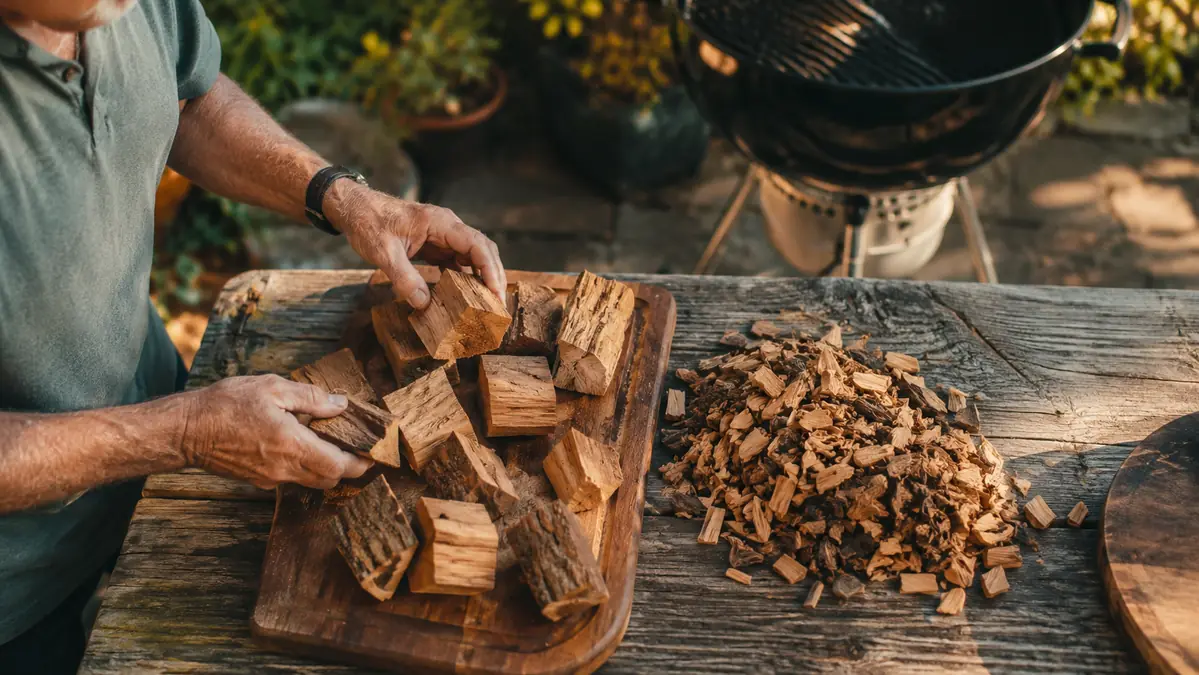
If you want the short answer: for anything longer than about 20 minutes on the grill, I reach for wood chunks. My Weber hickory wood chunks have been sitting in a plastic bin next to my charcoal kettle for going on three years now, and I still haven't run through the second bag. Wood chips have their place too, especially on my gas grill when I want a quick hit of smoke on a Tuesday night chicken breast, but they burn up fast and need babysitting.
I've cooked with both enough times to know this isn't really an either-or decision. It's a question of what you're cooking, how long it's going to be on the grill, and how much you want to be standing there reloading wood every twenty minutes. My son Travis asked me this exact question last month before he tried his first pork butt, so I figured I'd lay out the real differences instead of the marketing copy on the bag, since he'd been eyeing both at the hardware store and couldn't decide which one to grab.
Before I get into the comparison table, it helps to understand why these two products even exist side by side. They're both hickory wood, cut from the same trees in most cases, just processed differently. Chunks are cut into fist-sized pieces, chips are shredded down into small flakes about the size of a quarter. That size difference is the whole story here. A bigger piece of wood takes longer to burn through, a smaller piece catches fire and burns out fast. Everything else in this comparison flows from that one fact.
| Wood Chunks | Wood Chips for Smoking | |
|---|---|---|
| Cost Per Cook | One bag covers many cooks over a season | A bag often gets used up in a single long cook |
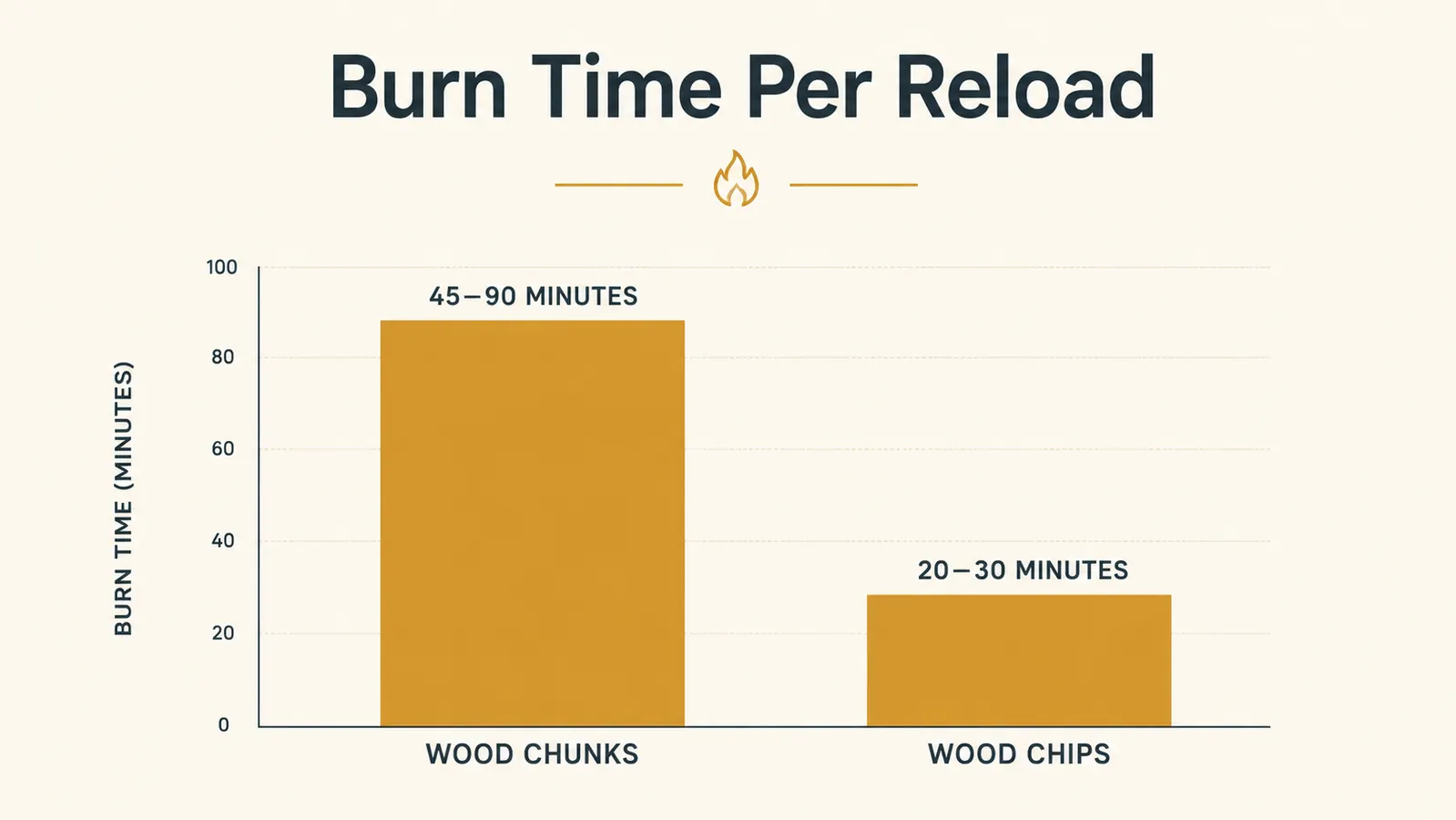
| Burn Time Per Reload | 45 to 90 minutes of steady smoke per chunk | 20 to 30 minutes before you're adding more |
| Smoke Flavor | Deep, sustained hickory smoke that builds over hours | Lighter, sharper burst that fades quickly |
| Prep Required | None. Straight onto coals or into a smoker box | Often soaked in water 30 minutes first, or wrapped in foil |
| Best Grill Type | Charcoal kettle, offset smoker, low and slow cooks | Gas grill smoker box, fast weeknight cooks |
| Reload Frequency Over a 6-Hour Smoke | 3 to 4 times | 10 to 12 times |
| Ash and Mess | Chunky leftover ash, easy to sift out of the ash pan | Fine, powdery ash that drifts into vents and grates |
| Shelf Life Once Opened | Over a year in a dry storage bin | 6 to 12 months, dries out or picks up moisture |
Where Weber Hickory Wood Chunks Win
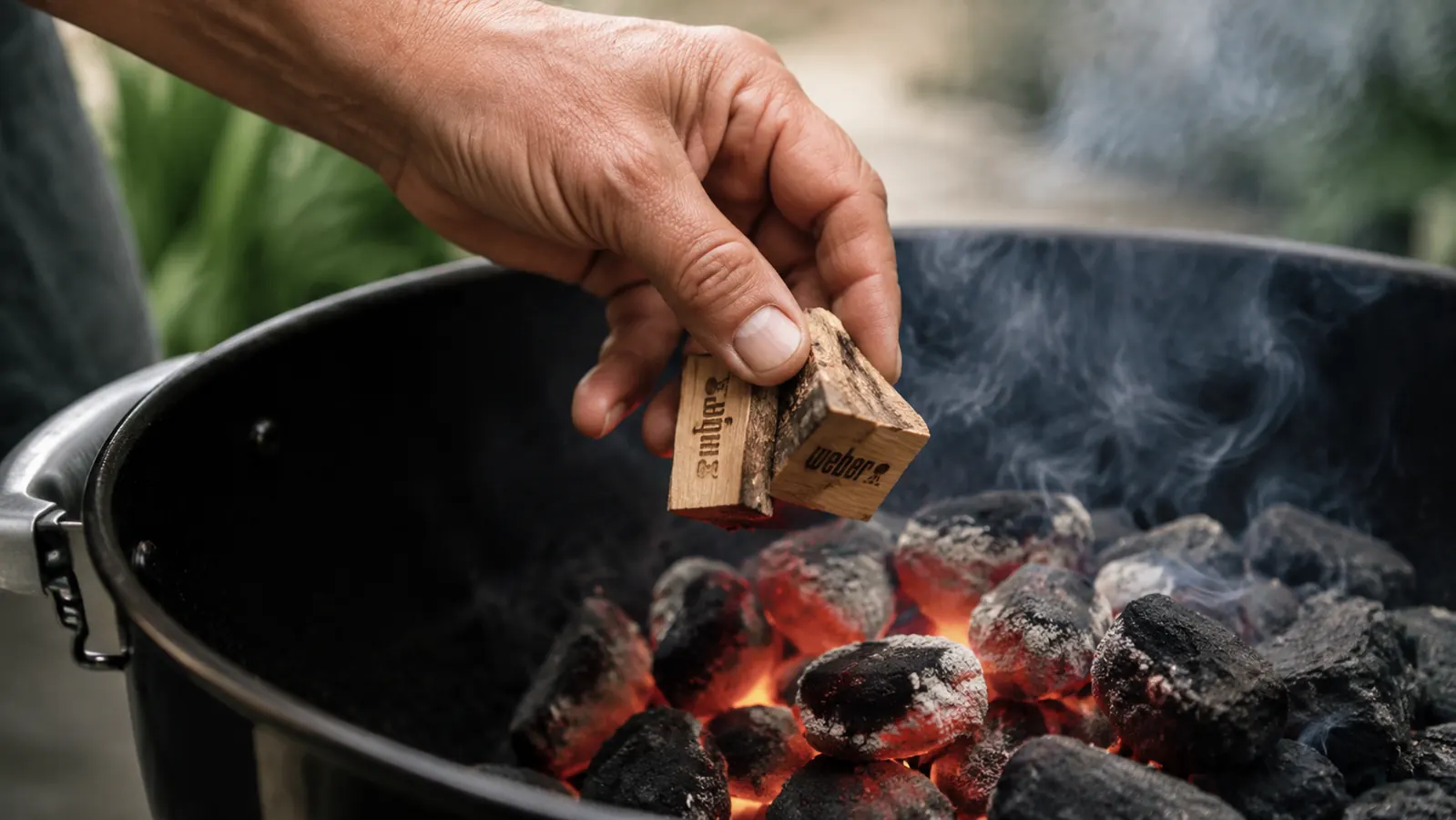
The biggest win is time. When I'm doing a pork shoulder or a rack of ribs on the charcoal kettle, I'm committed to four to six hours of cook time. Wood chips just can't keep up with that. I'd be out there every twenty minutes lifting the lid, which drops your grill temperature and lets all your heat and smoke escape. With the Weber chunks, I drop two or three in when I set up my coals, and I don't have to think about smoke again for close to an hour and a half.
The flavor is different too, not just longer. A chunk smolders instead of flashing off, so the smoke it produces is thinner and more consistent instead of a thick white plume that can turn bitter. Hank, my buddy down the road who's been smoking meat longer than I've been retired, put it this way: chips give you a smoke slap, chunks give you a smoke soak. That's stuck with me because it's exactly right. The meat has time to actually absorb that hickory flavor instead of just getting coated in it.
There's also less fuss involved. I don't soak my chunks, I don't wrap them in foil packets, I just toss them on the charcoal dry and let the fire do its job. Bonnie will tell you I'm not exactly a patient cook when it comes to prep steps, so anything that skips a step before the food even hits the grate is a win in my book. And because each chunk lasts so long, I go through the whole bag much slower than I ever did with chips, which means fewer trips to restock before a big cookout.
Where Wood Chips Win
I'm not going to pretend chips don't have a real use case, because they do. When my grandkids Mia and Owen are over and Bonnie wants burgers on the table in thirty minutes, I'm not lighting up a chimney of charcoal and waiting on chunks to get going. I'm firing up the 3-burner gas grill, tossing a handful of soaked wood chips into the smoker box, and getting a light smoky note on the burgers without adding an hour to dinner.
Chips also give you more control if you want to experiment. Because they burn fast, you can swap wood types mid-cook without much waste. I've done a mix of applewood and hickory chips on a batch of chicken thighs just to see how the flavor layered, and if I'd used chunks for that same test I would have wasted a lot of wood chasing a small taste difference. For short cooks, quick tests, or anyone who's still figuring out what wood flavor they even like, chips are the lower-commitment option.
What About Other Wood Flavors
Everything in this comparison holds true whether you're buying hickory, applewood, cherry, mesquite, or oak, since the difference between chunks and chips is about wood size, not species. I've smoked with cherry chunks on a batch of baby back ribs for Owen's birthday and got that same long, steady burn you get from hickory, just a milder, slightly sweeter smoke. Mesquite is the one exception worth a warning: it's a stronger, sharper flavor than hickory, and in chip form it can turn bitter fast if you use too much, so I'd lean toward mesquite chunks over mesquite chips even more than I would with hickory.
If you're brand new to smoking and trying to figure out which wood flavor to start with, hickory is still the safest bet for beef and pork, and it's what I keep coming back to on my kettle. Applewood and cherry are gentler and pair well with chicken or pork if you want something less bold. But no matter which flavor you land on, the chunk versus chip decision I'm laying out here applies the same way across the board.
Steady Smoke for Hours, Not Minutes
If your cook is longer than a quick weeknight dinner, wood chips are going to have you reloading every twenty minutes. Weber hickory wood chunks go on once and keep working while you check on the ribs, refill your drink, and actually enjoy your own backyard.
Amazon Check Today's Price on Amazon →Chips give you a smoke slap. Chunks give you a smoke soak.
How I Actually Use Both in My Backyard
Here's how it breaks down at my house in practice. If it's a low and slow weekend cook, brisket, pork butt, a rack of St. Louis ribs, I'm on the charcoal kettle with Weber hickory wood chunks, no question. I load my charcoal, let it ash over, drop in two chunks to start, and add another chunk or two every hour and a half depending on how the smoke is looking coming out of the vents.
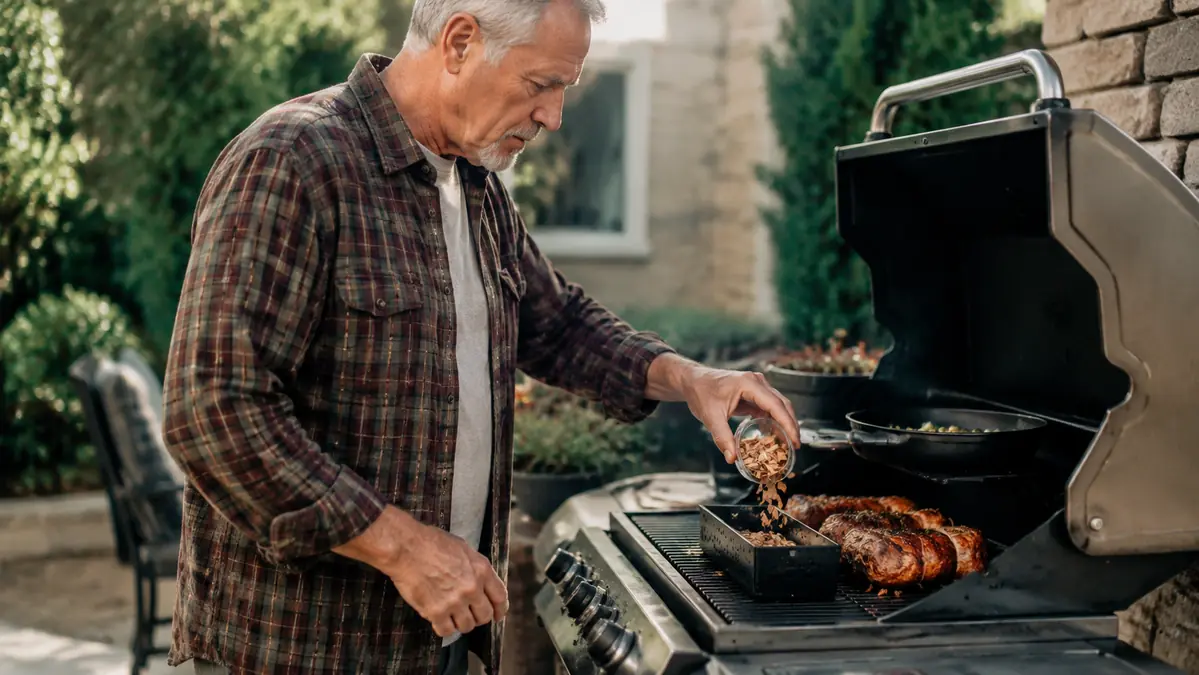
If it's a Tuesday and Travis is stopping by with the grandkids after work, I'm on the gas grill with the smoker box and a handful of chips. That gets a light smoky flavor onto chicken breasts or burgers in the time it takes Bonnie to set the table. I've tried chunks in the smoker box on the gas grill too, and they work, but they take longer to really get going since a gas grill's flame is more controlled and less intense than a bed of charcoal, so the payoff isn't worth the wait for a quick dinner.
One thing I'll mention because nobody tells you this on the bag: you can actually combine them. I've started a cook with a couple of chunks buried in the charcoal for that long, steady base of smoke, then tossed in a small handful of chips about an hour in when I wanted an extra push of flavor before wrapping the meat in foil. It's not necessary most of the time, but it's a trick worth knowing if you're chasing a specific flavor profile for a cookout.
I've also learned the hard way that soaking chunks in water, which some folks swear by, doesn't do much except delay when they start smoking and steam your fire down for a few minutes. I stopped soaking chunks years ago and never noticed a downside. Chips are a different story since they're thin enough that a quick soak does slow the burn just enough to stretch that twenty-minute window closer to thirty, which matters more when you're only working with a small handful at a time.
Who Should Buy Which
If most of your grilling involves anything over an hour, a charcoal kettle, or an offset smoker, buy the wood chunks. You'll use less wood over the course of a year, spend less time babysitting the fire, and get a more consistent flavor from start to finish. If you're mostly grilling on gas and doing shorter cooks like chicken, burgers, or vegetables, keep a bag of chips around for those nights, but don't expect them to carry you through a full brisket. Honestly, I keep both in my garage. The chunks get far more use, but the chips still earn their spot for a fast Tuesday dinner.
If you're just starting out and only want to buy one bag right now, I'd tell you what I told Travis: get the chunks first. Almost every new smoker ends up doing longer cooks eventually, ribs, a whole chicken, a pork shoulder for a weekend cookout, and that's exactly where chips fall short. You can always pick up a small bag of chips later for the quick weeknight cooks once you know your setup.
Stock the Wood That Actually Lasts the Whole Cook
A 4 lb bag of Weber hickory wood chunks has outlasted three seasons of grilling at my house. If you're tired of running back inside every twenty minutes to grab more chips, this is the fix.
Amazon Check Today's Price on Amazon →