
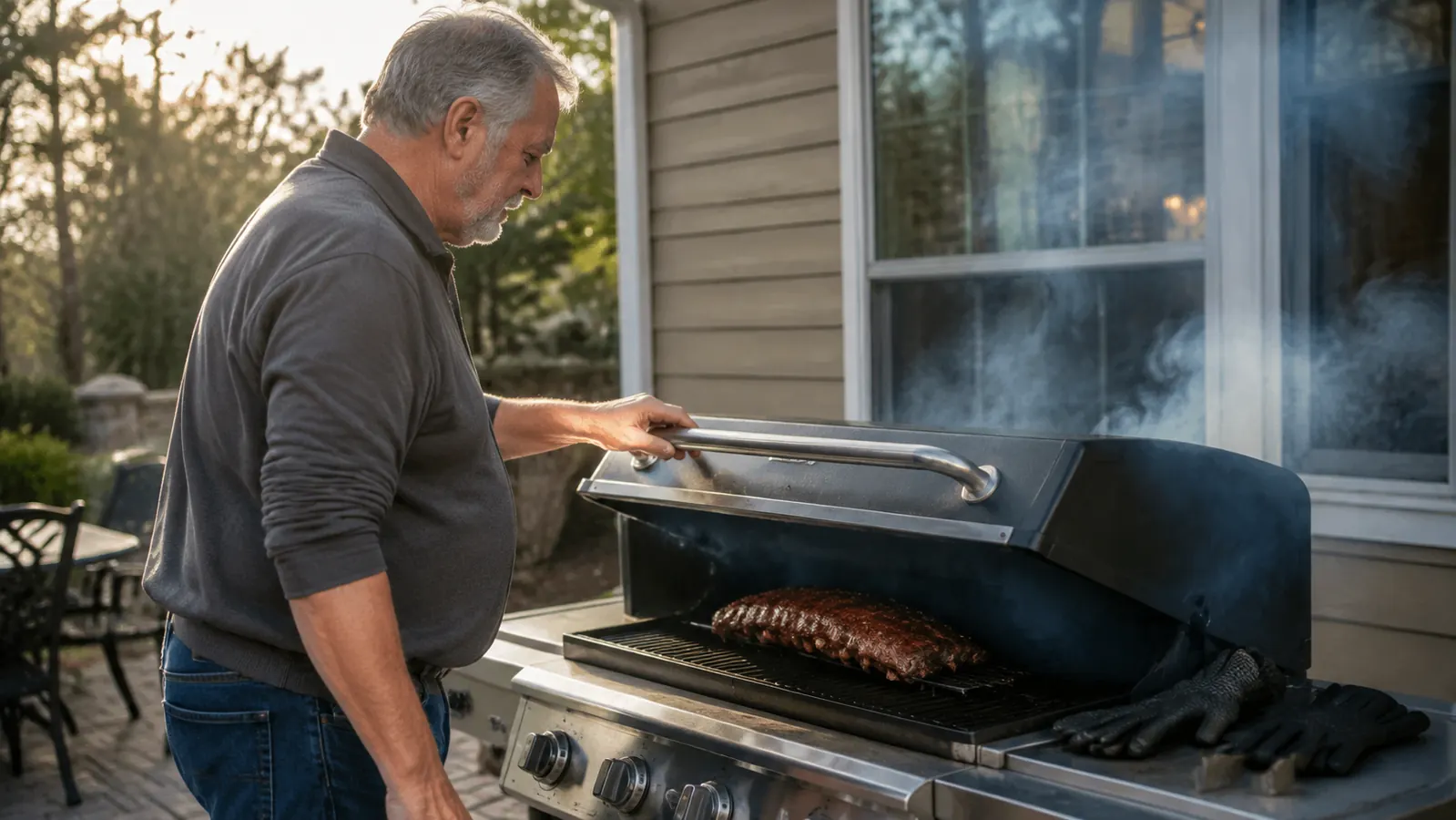
I spent the better part of two summers convinced my rib rub was the problem. I'd tweak the brown sugar, back off the cayenne, try a splash of apple juice in the foil wrap, all of it chasing a flavor I kept tasting at the barbecue joint on the highway outside town and never once got out of my own backyard. My ribs weren't bad. Bonnie ate them, Travis ate them, nobody complained out loud. But they were flat in a way I couldn't name, and I kept fixing the wrong thing because I didn't know there was a right thing to fix.
I run a three-burner gas grill I've had for close to ten years, and it does what a gas grill is built to do, cook meat evenly and reliably with almost no fuss. What I didn't understand for a long time is that it also does something else: nothing. No wood, no charcoal, no actual smoke, just heat. I was searing and slow-roasting ribs beautifully and getting zero of the flavor that makes barbecue taste like barbecue. I just didn't know a bag of Weber Hickory Wood Chunks was sitting on a hardware store shelf the whole time, waiting to close that gap.
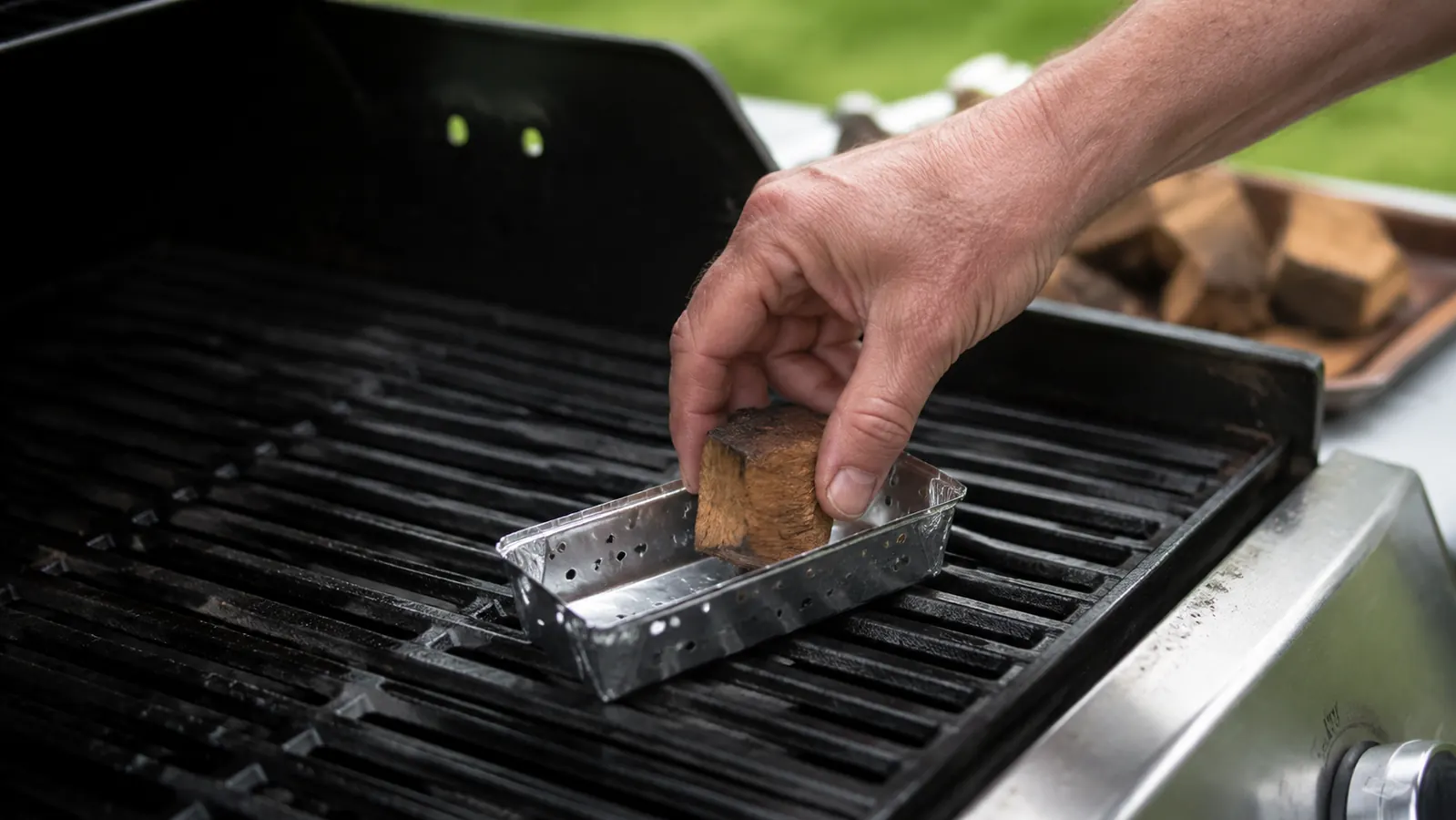
It took my buddy Hank pointing it out over the fence one Saturday, both of us with a beer in hand watching our grills do their thing. He asked what wood I was using. I told him none, my grill doesn't burn wood, it's gas. He laughed, not unkindly, and told me that's exactly the problem, and that gas grills can produce real smoke if you give them something to smoke with. He'd been tossing hickory wood chunks, the Weber ones, into a foil pouch on his own grill grate for a year and swore it was the difference between good ribs and ribs people ask about.
I'll admit I was a little defensive at first. Ten years of grilling and I'd never once used actual wood on purpose, and hearing that the missing piece was something this simple stung a little more than it should have. But I've been cooking long enough to know when to just try the thing instead of arguing with it, so I picked up a bag of Weber hickory chunks that week.
The first attempt was clumsy. I dropped two whole chunks straight onto the flame diffuser under one burner with no pouch, no foil, nothing, and within ten minutes I had a gray plume rolling out from under the lid that smelled more like a doused campfire than barbecue. The ribs came out with an ashy, bitter edge that Bonnie noticed before I did. I nearly wrote the whole thing off right there, decided Hank's setup must work for his grill and not mine.
What actually fixed it was slowing down and doing it the way Hank actually did it, not the shortcut version I'd invented in my head. One chunk, wrapped in a foil pouch with a few holes poked in the top, set on the grate over the lit burner, lid mostly closed with just a crack for airflow. That single change, going from raw chunks on the flame to one wrapped Weber chunk producing a slow, thin stream of smoke, was the entire difference between the acrid first attempt and what came next.
Ten years of grilling and I'd never once put actual wood smoke on my food. I'd been solving a smoke problem with a spice rack.
If your ribs taste flat no matter how you tweak the rub, the rub was never the problem
A gas grill can produce real, honest wood smoke, it just needs something to smoke with. A single Weber Hickory Wood Chunk in a foil pouch is the whole fix. Here's the Weber bag I've kept in the garage ever since.
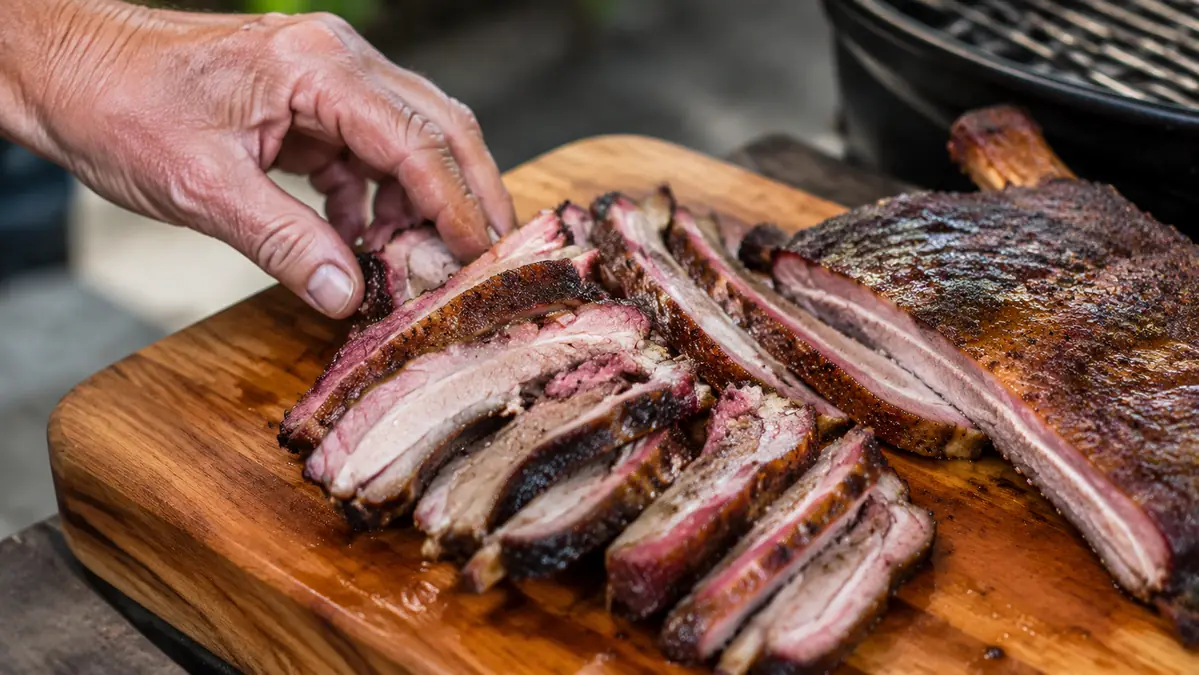
Amazon Check Today's Price on Amazon →The next rack of ribs I did with the foil pouch method came out with a pink smoke ring just under the bark, the kind of thing I'd only ever seen in photos from actual barbecue restaurants, not my own backyard. Travis noticed the second he bit into one and asked what I'd changed, figuring I'd finally cracked the rub. When I told him it was a piece of wood the size of my fist sitting in tin foil, he didn't believe me until I showed him the bag.
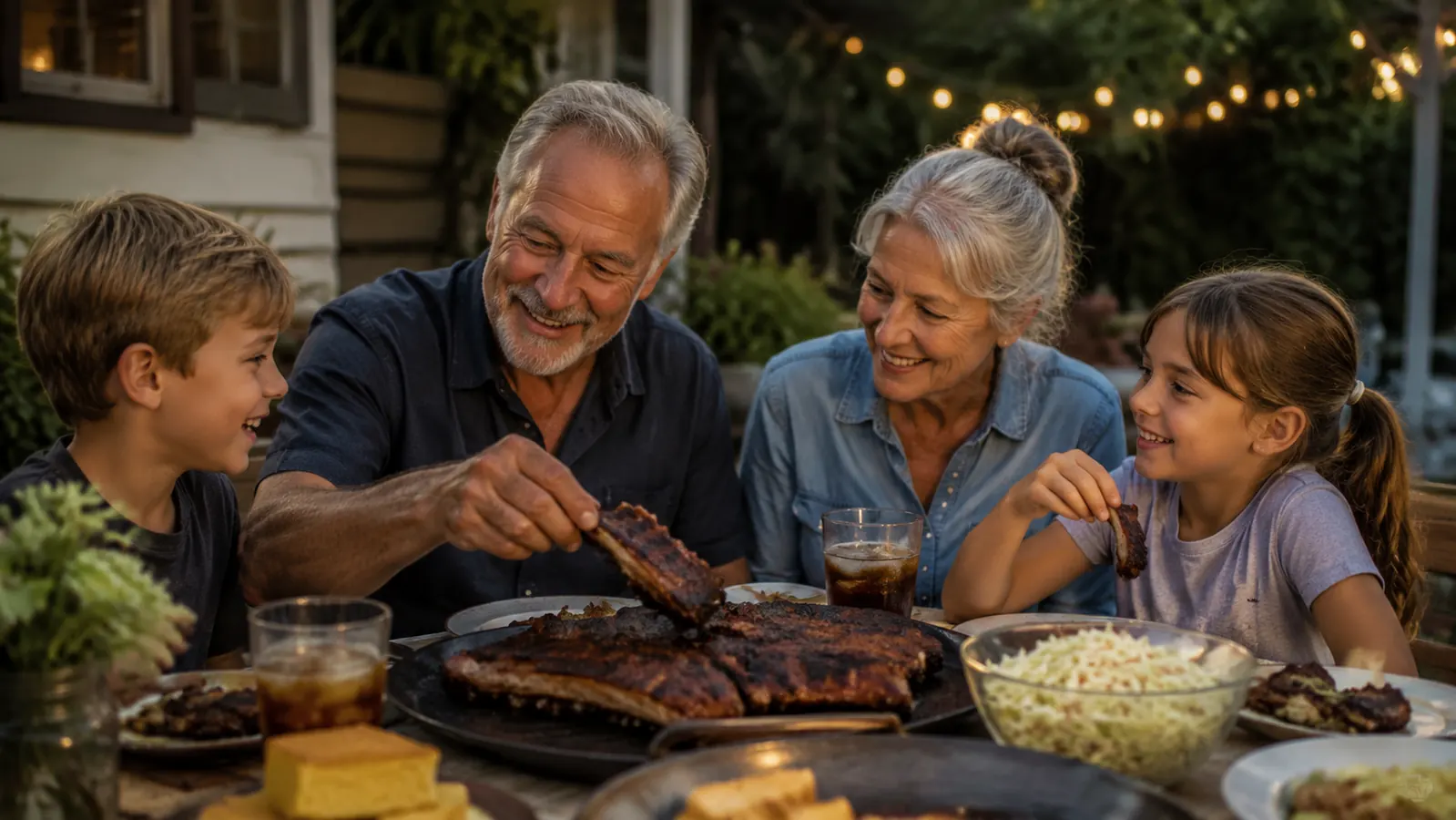
Mia, my eight-year-old granddaughter, has started calling it "Grandpa's smoke rock," which I'm never correcting because it's better than anything I would have come up with myself. Owen, who's six and mostly cares about whether there's enough sauce, just knows that ribs night got better last summer and hasn't asked why. Bonnie's read on it was simpler than either kid's: she said it finally tasted like the ribs from that highway place, closing the loop on two years of me messing with a rub that was fine the whole time.
I've since learned a few things that would have saved me that first bitter batch. One chunk is plenty for most rib cooks, two if I'm doing a pork butt. Wrapping it in foil with holes poked through slows the burn to a smolder instead of a flare. It needs to sit over a lit burner, not directly on an open flame, or it chars fast. None of it was complicated, nobody had just told me.
What I'd Tell You If We Were Sitting at My Kitchen Table
If you've got a gas grill and you've ever wondered why your barbecue never quite tastes like the stuff from an actual smokehouse, I'd tell you the same thing Hank told me over the fence that Saturday. It's probably not your rub or your timing. Gas grills don't smoke on their own, and most of us never think to give them something to smoke with. One bag of hickory chunks, used a chunk at a time in a simple foil pouch, is a small enough fix that it feels almost too easy for the difference it makes. I'm not going to tell you it turns a gas grill into a real smoker overnight, because it doesn't. But for the ribs, the pork, and the chicken thighs I've run through it since, it closed a gap I spent two summers trying to close with the wrong tool entirely.
Stop rebuilding your rub. The missing piece might just be real smoke.
A single hickory wood chunk, used right, is the difference between fine ribs and the kind people ask about twice. Check the current listing for today's price before your next cookout.
Amazon Check Today's Price on Amazon →