
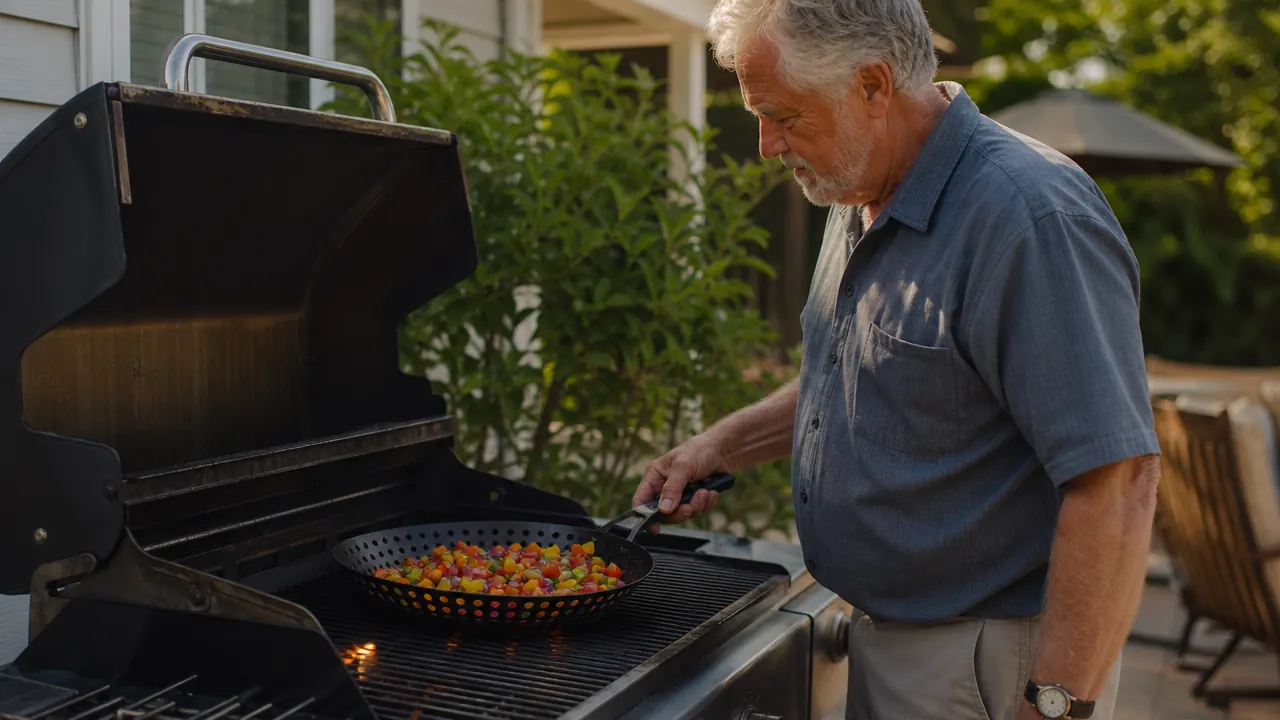
For years my grilled vegetables were a coin flip. Half the peppers ended up in the coals, the onions on top were still raw while the ones on the bottom turned to charcoal, and anything smaller than a mushroom cap just vanished through the grate entirely. I tried skewers, which worked until Mia and Owen wanted their vegetables off the stick and I was stuck re-threading zucchini with tongs while everyone else's dinner got cold. I tried foil packets, which solved the falling-through problem but replaced it with a new one: everything steamed instead of charred, and Bonnie started calling my foil-packet squash 'sad and gray.' The Cuisinart Grill Wok fixed both problems at once, but it took me a full season of trial and error to figure out the method that actually gets consistent char without losing pieces or babysitting the grill the whole time.
What follows is that method, broken into five steps. It's not complicated, and none of it requires special equipment beyond the wok itself, a decent knife, and a set of tongs. But the order matters, and skipping any one of these steps is exactly how I ended up with mushy centers or blackened edges more times than I want to admit.
Tired of losing vegetables through the grate every summer?
This whole method starts with the right basket. The Cuisinart Grill Wok is what I use for every session below. Check today's price and current availability on Amazon.
Amazon Check Today's Price on Amazon →Step 1: Cut everything the same size
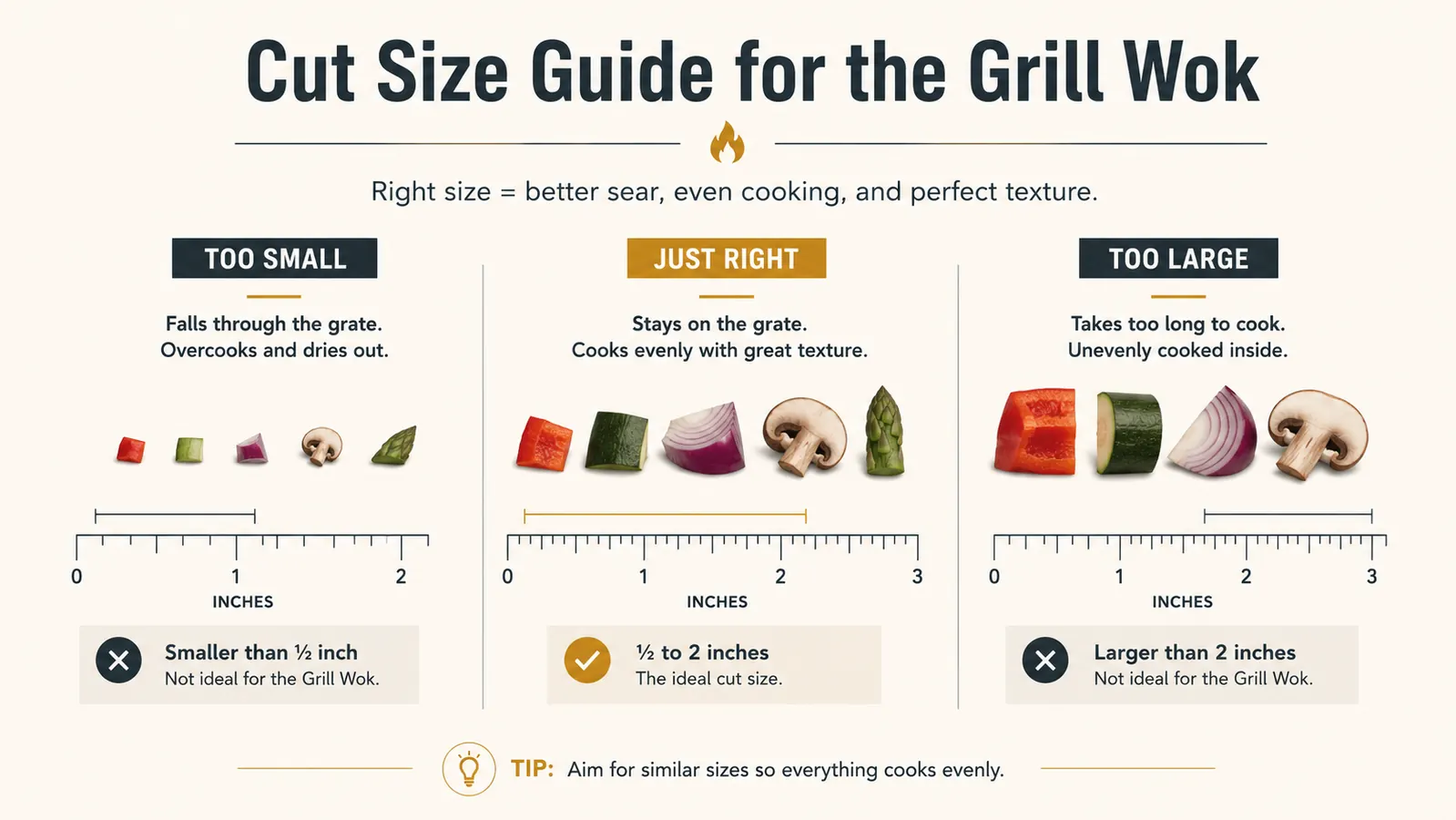
This is the step I ignored the longest, and it cost me the most. If your onion pieces are twice the size of your pepper pieces, the onions will still be crunchy when the peppers are already soft and starting to blacken at the edges. I aim for pieces roughly three-quarters of an inch to an inch across, whether that's a diced bell pepper, a quartered mushroom cap, or a chunk of zucchini. Anything smaller than that risks slipping through even the wok's perforations if you're shaking it hard, and anything much bigger takes longer to cook through than the rest of your batch.
I also learned to group vegetables by density rather than throwing everything into one uniform mix. Peppers, onions, and zucchini cook at roughly the same rate and pair well together. Denser things like carrots or potato chunks take noticeably longer, so I either cut those smaller than the rest of the batch or give them a five-minute head start in the wok before adding the quicker-cooking vegetables on top. Cherry tomatoes and mushrooms are the fastest of everything I grill, so those go in last, usually with about four minutes left on the clock.
One more thing worth mentioning: cut vegetables ahead of time if you can, but don't oil them until right before they hit the grill. I made the mistake once of prepping and oiling a full batch two hours before Travis and the grandkids showed up, and the salt in my seasoning had pulled enough moisture out of the zucchini that it steamed instead of charred. Cut ahead, season and oil right before cooking.
My go-to mix through most of the summer is bell peppers, red onion, zucchini, and yellow squash, mostly because that's what Bonnie already has on hand from the garden and it grills at a fairly even rate once cut to size. When Hank comes over I'll throw in Brussels sprouts halved lengthwise, which need a little longer than the rest and benefit from that early head start I mentioned. Cherry tomatoes are the one thing I never cut, since halving them just lets all the juice run out onto the grate instead of staying in the fruit where it belongs.
Step 2: Oil the wok and the vegetables, not just one
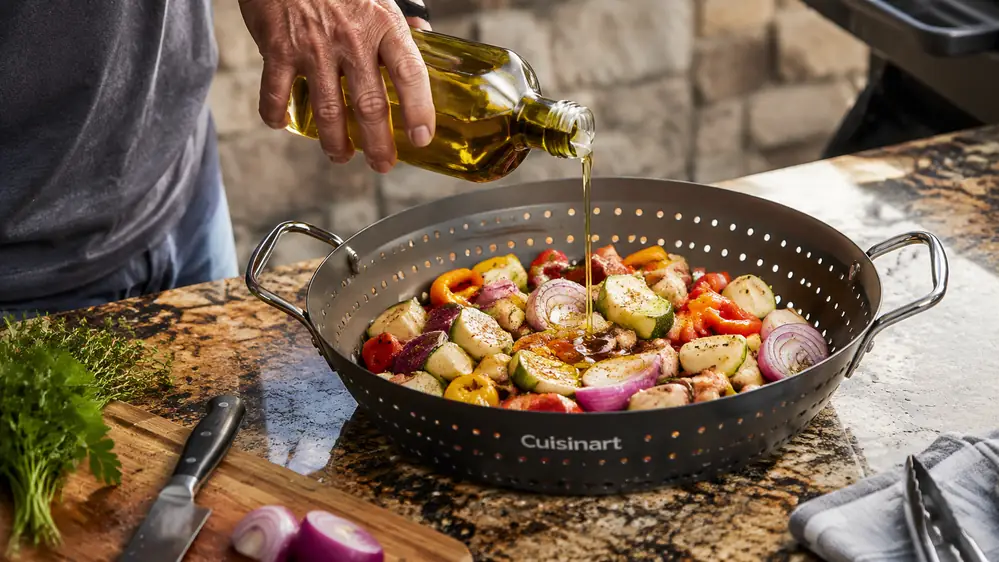
I used to just toss the vegetables in a bowl with oil and dump them straight into a dry wok. That works fine for the first few minutes, but the coating needs its own light coat of oil to keep releasing food cleanly through a whole session, especially once you're past the 20 or 30 use mark and the coating has softened a little, which mine had by midsummer. A quick brush or spray of oil across the basket itself before loading it takes ten seconds and saves you from scraping stuck-on bits later.
For the vegetables themselves, I toss them in a bowl with about a tablespoon of olive oil per four cups of cut vegetables, along with salt, pepper, and whatever else I'm using that week, garlic powder most Tuesdays, a splash of balsamic if Bonnie's asked for something a little sweeter. The oil does two jobs here: it helps the char develop instead of the vegetables just drying out, and it acts as a barrier against sticking even when the coating isn't at its freshest.
Don't over-oil. I did this early on, thinking more oil meant less sticking, and instead got flare-ups every time oil dripped through the perforations onto the burner below. A light, even coat that leaves the vegetables glossy but not dripping is the target. If you can see oil pooling in the bottom of your prep bowl after tossing, you've used too much.
Step 3: Preheat the wok before loading it
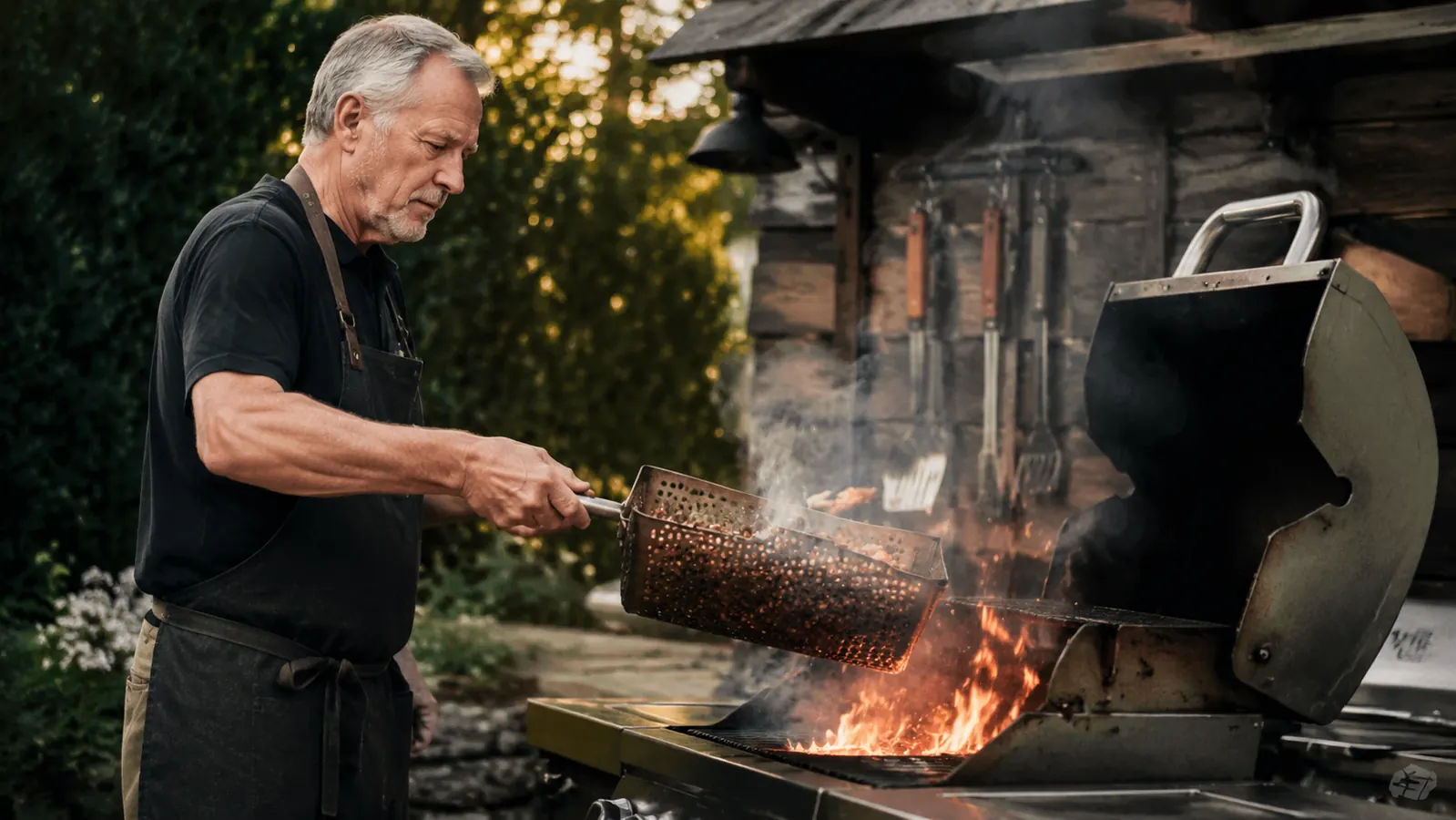
This one took me a while to figure out, but it made the single biggest difference in getting real char instead of a slow steam. I run my 3-burner gas grill on high for about five minutes with the empty, oiled wok already sitting on the grate, lid down. By the time I load the vegetables, the metal is hot enough that they start sizzling and browning immediately on contact instead of sitting there absorbing heat slowly while releasing moisture.
On the charcoal kettle, I do the same thing but time it off the coals instead of a burner dial, waiting until I can hold my hand six inches above the grate for only two or three seconds before I set the empty wok down. That's roughly medium-high, which is my sweet spot for vegetables. Any hotter and the outsides burn before the insides soften. Any cooler and you're back to steaming.
I'll admit I skipped this preheating step for the first month I owned the wok, mostly out of impatience to get dinner moving. The difference once I started doing it properly was obvious within the first batch. Vegetables that used to take 18 or 20 minutes to pick up any real color were showing char in under ten, and the texture was noticeably better too, less mushy in the middle because they weren't sitting in a slowly warming basket losing moisture the whole time.
Step 4: Load it half full and manage the burners
Bonnie had to correct me on this one directly, because I spent my first few weeks heaping the wok as full as it would physically hold, thinking more vegetables per session meant less work overall. Instead I got a layer of nicely charred vegetables on top and a soggy, pale mess underneath that never got direct contact with the grate. Half full, maybe two-thirds at the absolute most, is the actual sweet spot. Every piece needs room to touch metal and catch heat directly, not just sit stacked on top of its neighbors.
On my 3-burner setup, the middle burner runs hotter than the two on either side, which means the wok doesn't heat evenly if I park it in one spot for the whole cook. I position the wok mostly over the two outer burners with just the edge catching the middle one, and I rotate it a quarter turn every few minutes to keep any one section from scorching while the rest lags behind. If you've only got a smaller two-burner or single-burner grill, this matters even more, since there's less room to spread the heat out.
If you're cooking for a crowd, which happens most weekends when Travis brings Mia and Owen over, resist the urge to cram a double batch into one wok load. I run two batches back to back instead, keeping the first one warm in a covered dish while the second finishes. It takes maybe ten extra minutes total, and the payoff is that every single piece gets the same treatment instead of half the batch coming out undercooked.
I also learned to account for wind on the back porch, which sounds minor until you've had a gust push all your heat to one side of the grill mid-cook. On breezier evenings I'll check the wok an extra time or two beyond my normal rotation schedule, just to make sure one side isn't cooking faster because the flame's being pushed sideways. It's a small adjustment, but it's saved me from a lopsided batch more than once.
Step 5: Toss on a schedule, not by feel
For the first month I owned this thing, I tossed the vegetables whenever it occurred to me, which usually meant either too often, so nothing ever developed real char, or not often enough, so one side burned while the rest stayed pale. What actually works is tossing on a fixed schedule: every three to four minutes, using the wok's handle to give it a firm shake and a rotation, not just a light jiggle. That's frequent enough that no single side sits directly on the hottest part of the grate long enough to scorch, but infrequent enough that each side gets real contact time to develop color.
I keep a rough mental clock running from the moment I load the wok. Dense vegetables like peppers and onions usually need 12 to 15 minutes total with three or four tosses in that window. Quick-cooking additions like cherry tomatoes or mushrooms go in around the eight-minute mark so they finish alongside everything else instead of turning to mush. I use a grill glove every time I handle the wok now, since the handle runs genuinely hot after ten minutes over direct heat, something I learned the hard way early on.
The last toss, right before I pull everything off, is where I check for doneness rather than just going by the clock. I want visible char on at least two sides of most pieces and a fork that slides in with just a little resistance, not one that meets a hard raw center or slides through mush. If most of the batch looks right but a few pieces are still firm, I'll give it another minute or two rather than pulling the whole load early just because the majority looks done.
What Else Helps
A pair of long silicone-tipped tongs makes tossing and checking doneness a lot easier than trying to shake the wok by its handle alone, especially once you're loading heavier batches for a full table. I also keep a small dish of extra oil and a basting brush next to the grill for the rare occasion a section looks like it's drying out mid-cook, a quick brush over the drier spots buys you another few minutes before anything sticks. And if you're grilling for picky eaters like Mia, who wants shrimp but not much green, running two smaller batches with different seasoning takes almost no extra time once you've got the timing down and saves you from negotiating over a shared plate.
Timing the vegetables to finish alongside your protein is worth planning for too. I usually start the wok going about five minutes before I put chicken thighs or a steak on the other side of the grate, since the vegetables tend to need a shorter total cook time than most cuts of meat. That way everything lands on the table hot at the same time instead of vegetables sitting under foil going lukewarm while I wait on a thicker piece of meat to finish.
The wok didn't just stop my vegetables from falling into the coals. It's what finally got me to start the vegetables first and build the rest of the meal around them, instead of throwing them on as an afterthought.
Ready to stop guessing with vegetables on the grill?
Every step above assumes you've got a perforated basket that holds heat evenly and releases food cleanly. The Cuisinart Grill Wok is the one I use every week. Check today's price and current availability on Amazon.
Amazon Check Today's Price on Amazon →