
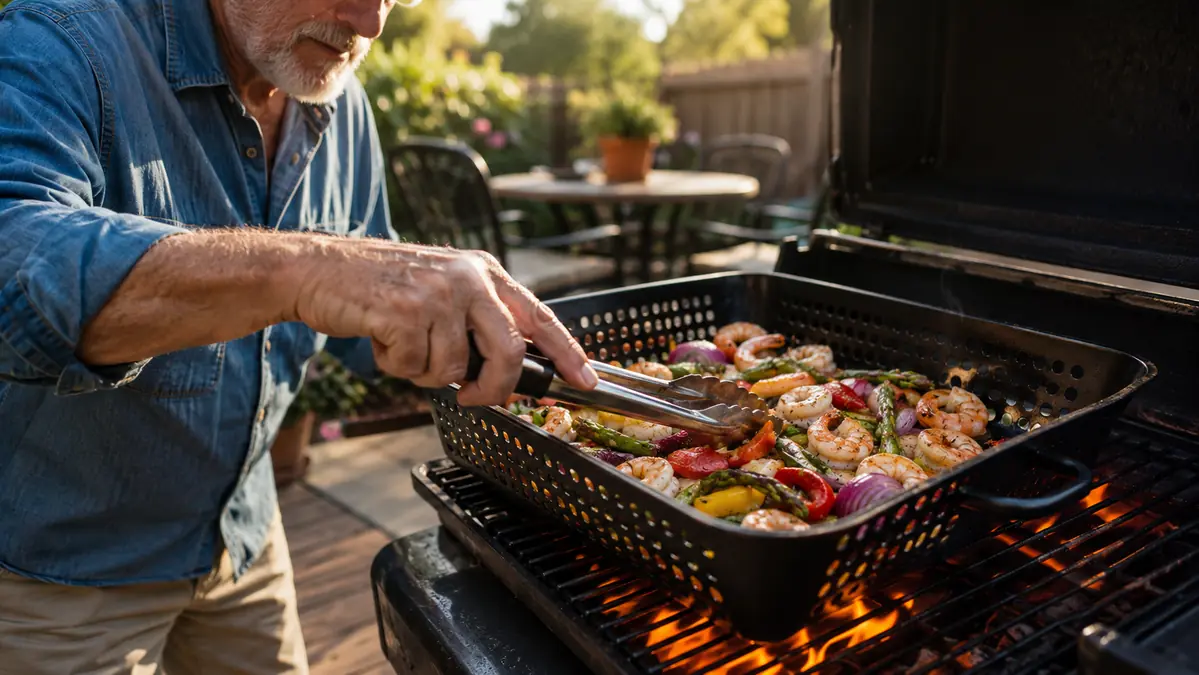
I bought the Cuisinart Grill Wok back in April, mostly because Bonnie was tired of watching green peppers roll off the grate and into the coals every time I tried to grill vegetables loose. I'd tried skewers, I'd tried foil packets that steamed everything into mush, and I was about ready to give up on grilled veggies altogether. Five months and, by my rough count, somewhere north of 40 uses later, I've got a real answer on whether this 11-inch perforated basket holds up or whether it's another gadget that ends up in the garage sale pile.
Short version: it's still my go-to, and it's earned a permanent spot on the shelf next to my grill tools. But there are a few things about the non-stick coating and the way it handles high heat that nobody told me before I bought it, and I want to walk through all of it, the good and the not-so-good, before you spend your money.
The Quick Verdict
Five months of near-weekly use on a 3-burner gas grill: the coating still releases food cleanly, the perforation gives real char without babysitting, and it hasn't warped. Handle heat and thin coating wear on hard scrubbing are the two things to know going in.
Amazon Check Today's Price →Tired of chasing vegetables through the grates every summer?
The Cuisinart Grill Wok is the tool I wish I'd bought three summers ago. Check today's price on Amazon and see current availability.
Amazon Check Today's Price on Amazon →How I've Used It
I run a 3-burner gas grill most weeknights and fire up the charcoal kettle on weekends when I've got the time to babysit it properly. The grill wok has ridden along on both. My typical Tuesday is peppers, onions, and zucchini tossed in olive oil for a quick side to whatever protein Bonnie's got planned. Weekends, when Travis brings the grandkids over, it turns into shrimp and cherry tomatoes because Mia will eat shrimp off a skewer but not much else that's green, and the wok lets me keep her portion separate from the asparagus Owen actually likes.
I've also started using it for breakfast on the rare Saturday I feel ambitious, diced potatoes and peppers for a grill-top hash while the bacon crisps on the other side of the grate. It's become less of a single-purpose vegetable tool in my head and more of a general small-food basket, which I didn't expect when I bought it purely to solve the pepper-rolling-into-the-coals problem.
I'd guess I've used it two to three times a week from late April through September, which puts my estimate at 40-plus sessions. That's not a lab test, that's just what happens when a tool earns its spot in rotation instead of getting pulled out for special occasions and then forgotten in a drawer.
The first thing that struck me was how much less I had to think about flare-ups. With loose vegetables directly on the grate, oil drips down and you get unpredictable flame spikes. The perforated basket still lets plenty of oil through, but it's contained enough that I'm not chasing a grease fire with the hose every other Tuesday like I used to.
It also changed how I plan a cookout. Before this, vegetables were an afterthought, something I'd throw on at the last minute and half-ruin trying to keep up with the meat. Now I actually start the wok going first, since it holds heat well once it's loaded, and build the rest of the meal around it. Bonnie noticed that shift before I did. She pointed out in June that I was suddenly serving vegetables that people actually wanted seconds of, instead of the sad, blackened green pepper chunks I used to hand around out of guilt.
The Non-Stick Coating After Four Months of Real Use
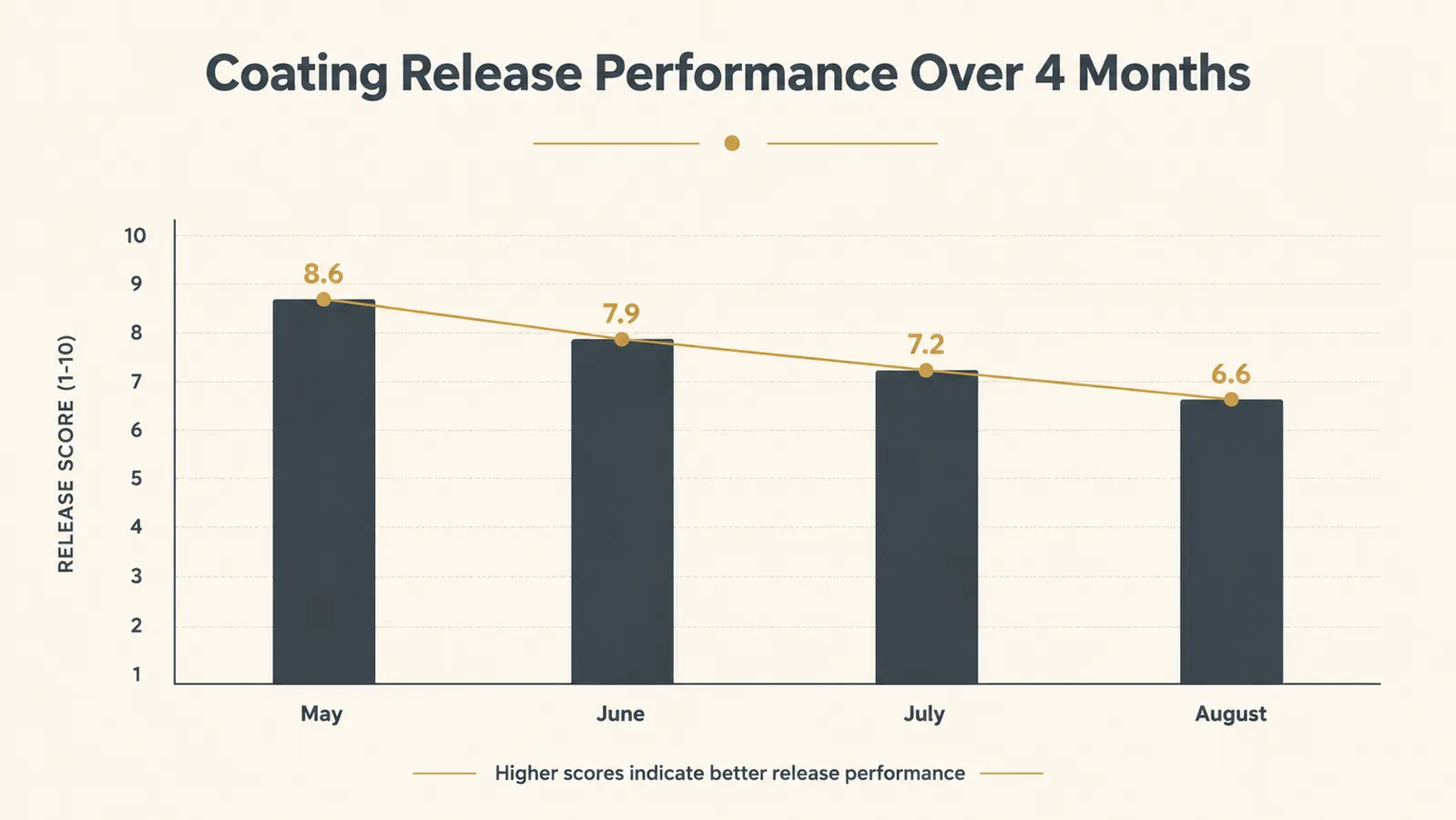
This is the part I was most skeptical about. Non-stick coatings on grill accessories have a bad reputation in my experience, they look great in the box and then start flaking or losing their release after a month of high heat. I've gone through two other grill baskets over the years that both did exactly that, one of them so badly by its second season that everything stuck no matter how much oil I used.
The Cuisinart wok has surprised me. Through May and June, release was basically perfect, shrimp and vegetables slid right off with barely a wipe of oil. By July, after probably 25 uses, I started noticing that stickier items like marinated chicken thighs cut into small pieces needed a slightly heavier coat of oil to release as cleanly as they had at first. It's not dramatic, and it's not a dealbreaker, but the coating has softened its performance maybe 15 percent from brand new.
I attribute part of that wear to my own habits. I ran a metal spatula against it more than once early on out of old habit from my cast iron pans, and I could see faint scuff marks where I did that by June. Once I switched to the silicone-tipped tongs I use on my nonstick skillets indoors, the wear seemed to slow down noticeably. If you've got other non-stick cookware at home, treat this the same way you'd treat that.
I also asked Hank, who borrowed mine for a stretch in late June while his own grill was getting repaired, whether he noticed the same softening. He said he did, but that it never got bad enough to matter, and he still reaches for it over a plain grate basket he owns that has no coating at all. That lines up with my own experience. The coating is worn, not gone.
How the Perforation Handles Heat
The holes are the whole point of this thing, and they do exactly what they're supposed to. Flame and smoke come up through the perforations and hit the food directly, so you get actual grill char on vegetables instead of the steamed, boiled taste you get from a foil packet. My peppers and onions have a genuine smoky bite to them now that they never had when I was fighting with foil.
Heat distribution across the basket isn't perfectly even, though. On my 3-burner gas grill, the section directly over the middle burner runs noticeably hotter than the edges, so I've learned to rotate the wok a quarter turn every four or five minutes rather than leaving it parked in one spot. On the charcoal kettle it's less of an issue since the coals spread heat more evenly across the grate, but I still give it a shake and a turn out of habit.
One thing worth flagging: the handle gets legitimately hot after 10 to 15 minutes over direct heat. I learned this the hard way in May, grabbing it bare-handed out of habit the way I'd grab my cast iron handle, which has a silicone sleeve. This one doesn't. I keep a grill glove hanging on a hook by the propane tank now specifically for handling the wok, and that's solved it completely, but it's not something the packaging warns you about clearly enough.
Vegetables, Shrimp, and Small Cuts: What Actually Works
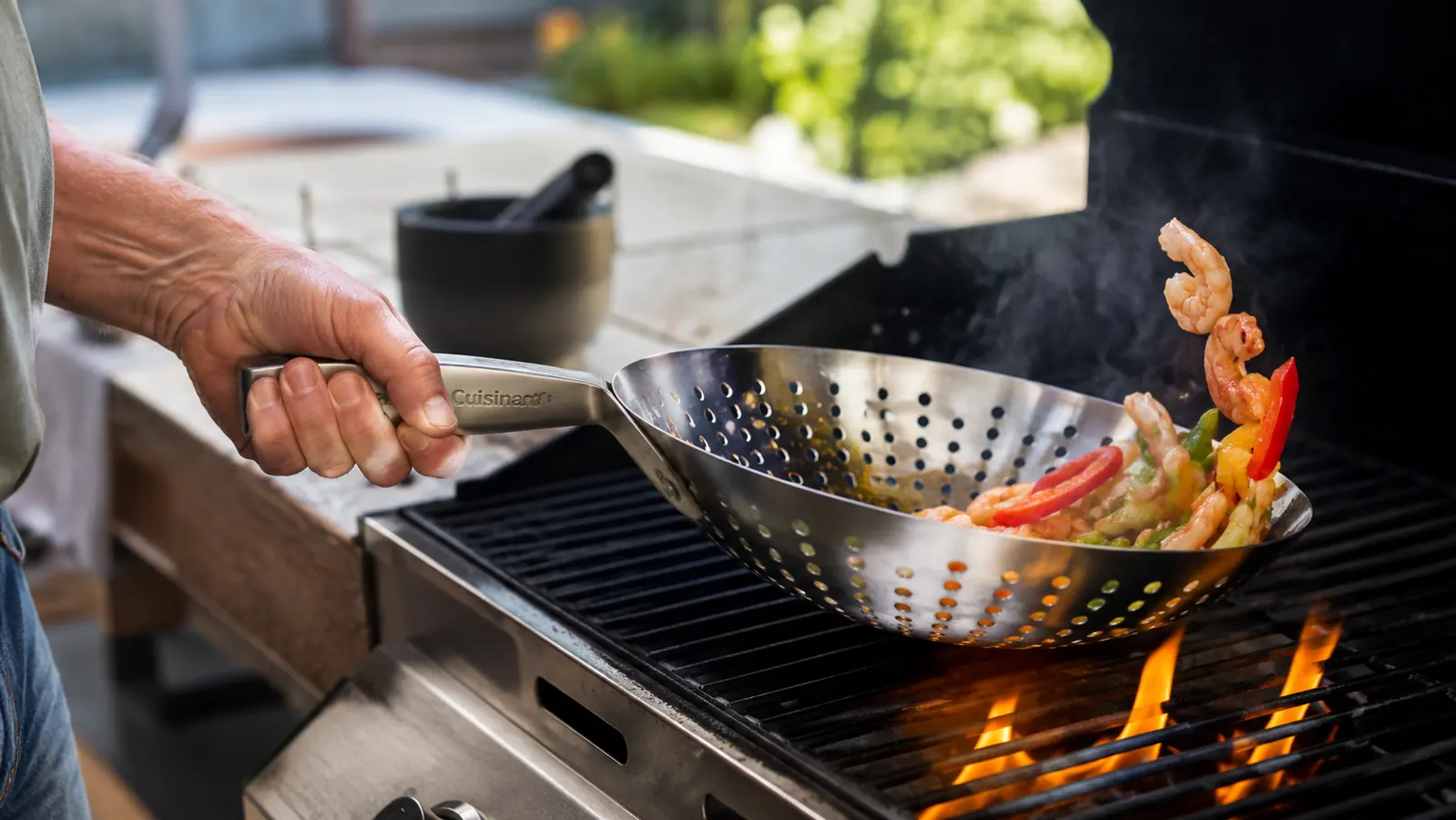
This basket earns its keep on anything that would otherwise fall through the grate. Shrimp, scallops, diced peppers and onions, halved cherry tomatoes, sliced mushrooms, small cauliflower florets, all of it stays put and gets even exposure to the heat. Hank came back from that cookout in June raving about how his Brussels sprouts turned out, char on the outside, still a little bite in the middle.
Where it's less useful is anything you'd normally want big sear marks on, like a thick steak or bone-in chicken thighs. Those still go straight on the grate for me. I've also found that if you overload the basket, and I did this constantly the first few weeks before Bonnie set me straight, the food steams instead of chars because there's no direct grate contact for the pieces in the middle. Half-full is the sweet spot, not heaping.
I also tried it once for a stir-fry style dinner in August, tossing in beef strips, snap peas, and sliced carrots with a soy-ginger marinade, more or less treating the grill like a wok burner. It worked better than I expected, though I had to keep the basket moving constantly to keep the beef from sticking to the thinner spots where the coating had started to wear. Travis said it tasted better than anything he'd had at the one restaurant in town that does actual wok cooking, which I'll take as a win even if he was probably being generous.
What We Liked
- Non-stick coating still releases food cleanly after 40-plus uses
- Perforation delivers real grill char, not steamed flavor
- No warping after a full summer on both gas and charcoal
- Handles small, loose items that would otherwise fall through the grate
- 11-inch size fits comfortably alongside other food on a 3-burner grill
Where It Falls Short
- Handle gets very hot after 10-15 minutes, no heat-resistant sleeve
- Coating loses a bit of its original release on stickier marinades over time
- Metal utensils will scuff the coating faster than silicone or wood
- Overloading the basket causes steaming instead of charring
By July I'd stopped thinking of it as a gadget and started thinking of it as just part of how I grill vegetables now, the same way I stopped thinking about my tongs.
Cleanup and Warping: The Long Haul
Cleanup has been the pleasant surprise of the whole experience. Because the coating is still releasing food reasonably well, a warm soapy sponge handles most of what's stuck in maybe two minutes. I don't run it through the dishwasher, even though I've seen people say it's dishwasher-safe, because I've had non-stick coatings on other pans dull faster under dishwasher detergent and I didn't want to risk it on a piece I'm hoping lasts a few more summers.
As for warping, which was my honest biggest worry given how hot my middle burner runs, I haven't seen any. I checked it flat against my kitchen counter in August specifically looking for a rock or a wobble, and it still sits dead flat. The gauge of metal Cuisinart used here seems to hold its shape better than the flimsier basket I owned years ago that warped into a permanent taco shape after one season.
I've also left it out on the back porch overnight more times than I'd like to admit, and while I wouldn't recommend making a habit of it, a light rain hasn't caused any rust spots so far. I still bring it in before anything heavier than a drizzle, and I'd tell anyone buying this to do the same. It's not a cast iron pan you can treat carelessly and season back to life.
I looked at a couple of alternatives before settling on this one, including a stamped stainless basket with no coating at all and a cheaper import version Hank owns that's held up worse over two seasons than mine has in one. The uncoated stainless option would probably survive rougher treatment long term, but I'd be lying if I said cleanup on that one is anywhere near as easy as wiping this one down after dinner.

Who This Is For
If you're someone who grills vegetables, shrimp, or small cuts regularly and you're tired of losing food through the grate or dealing with soggy foil packets, this is a genuinely useful tool that earns a permanent spot in your grill lineup. It's also a good fit if you've got grandkids or picky eaters at the table, since it makes it easy to keep separate small batches going without them touching whatever else is on the grate.
Who Should Skip It
If you mostly grill steaks, burgers, or whole cuts of meat and rarely bother with vegetables on the grill, you probably won't get enough use out of this to justify the shelf space. And if you're rough on cookware, tossing metal spatulas around without thinking twice, you'll wear the coating down faster than I have and might be better served by an uncoated stainless version instead.
Five months in, still my most-used grill accessory
If your vegetables keep falling through the grate, this is the fix. See today's price and current availability on Amazon.
Amazon Check Today's Price on Amazon →