
I'll say the quiet part first. After going through five bags of Weber Hickory Wood Chunks since last year, including one batch that turned a rack of ribs bitter enough that my grandson Owen made a face and asked why they tasted burnt, I don't think this product is quite as simple as a 4.7-star rating makes it look. It's a good bag of wood. I'm not walking that back. But there are things buyers find out the hard way that never make it into a five-star review, and I want to lay those out plainly instead of just telling you it's great and moving on.
This isn't the season-long breakdown of burn times and value math. I've written that one already. This is the stuff that surprised me, the stuff I got wrong, and the stuff I see other guys getting wrong at the hardware store when they grab a bag off the shelf thinking more smoke automatically means more flavor. It doesn't. Sometimes it means a wasted brisket and a quiet ride home, and I'd rather you hear that from me before you learn it the way I did.
The Quick Verdict
A genuinely good hickory chunk once you know its two blind spots: inconsistent bark content bag to bag, and how easy it is to oversmoke with it.
Amazon Check Today's Price →Before you buy another bag of chips that burns out in twenty minutes
Weber Hickory Wood Chunks solve the burn-time problem chips have. They don't solve the oversmoking problem on their own, that part's on you, but with the right amount they're the easiest upgrade I've made to my setup in years.
Amazon Check Today's Price on Amazon →The Test I Actually Ran
I didn't set out to write a takedown of this product. I bought the first bag on my buddy Hank's recommendation and ran it the same way most people would, tossing chunks in without much thought about ratio or timing. It took getting a few cooks wrong, including that rib rack for Owen's birthday cookout, before I started paying attention to what was actually happening inside the smoker box instead of just assuming smoke equals flavor.
Since then I've run these chunks on my three-burner gas grill using a small perforated smoker box, and on my charcoal kettle using both the snake method and straight on top of lit coals. I've weighed chunks before use, timed how long they smolder versus flat-out flare, and paid attention to the color of the smoke coming off them, because that turned out to matter more than anything else I was tracking.
I also started keeping a small notepad by the back door, which Bonnie thinks is a little much, jotting down how many chunks I used, how long the cook ran, and whether the smoke came out thin and blue or heavy and white. After a dozen or so entries a pattern showed up that no bag label ever mentioned, and it's the same pattern that runs through most of what follows here.
What Nobody Tells You About What's Actually in the Bag
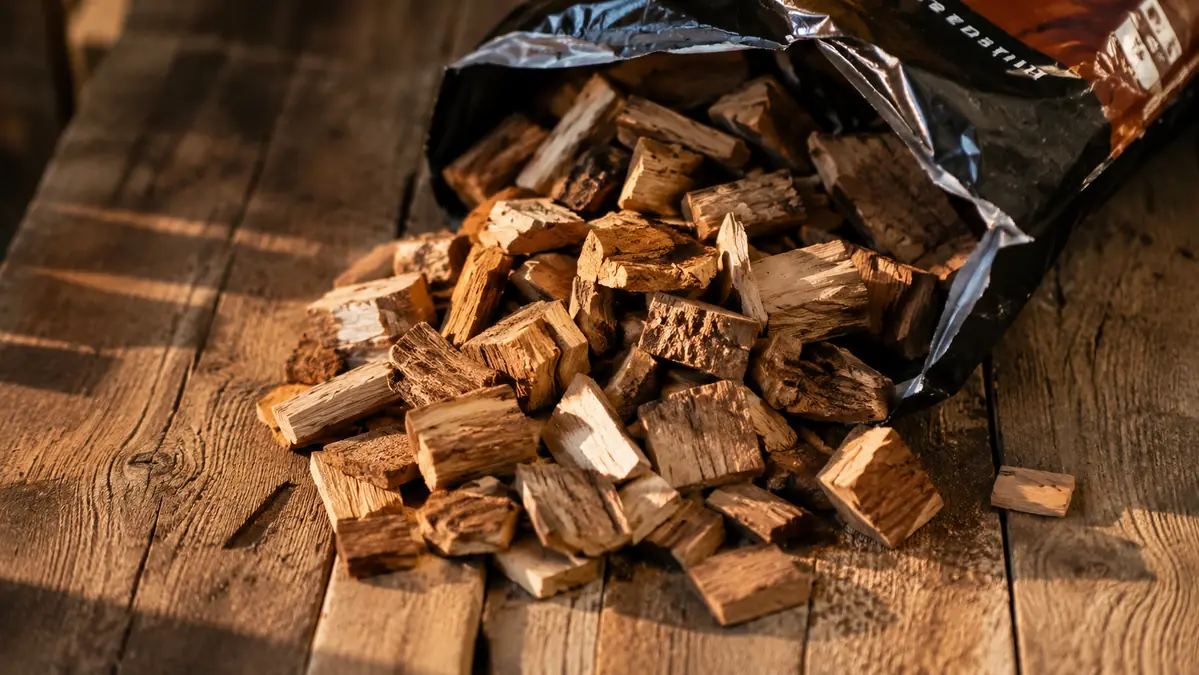
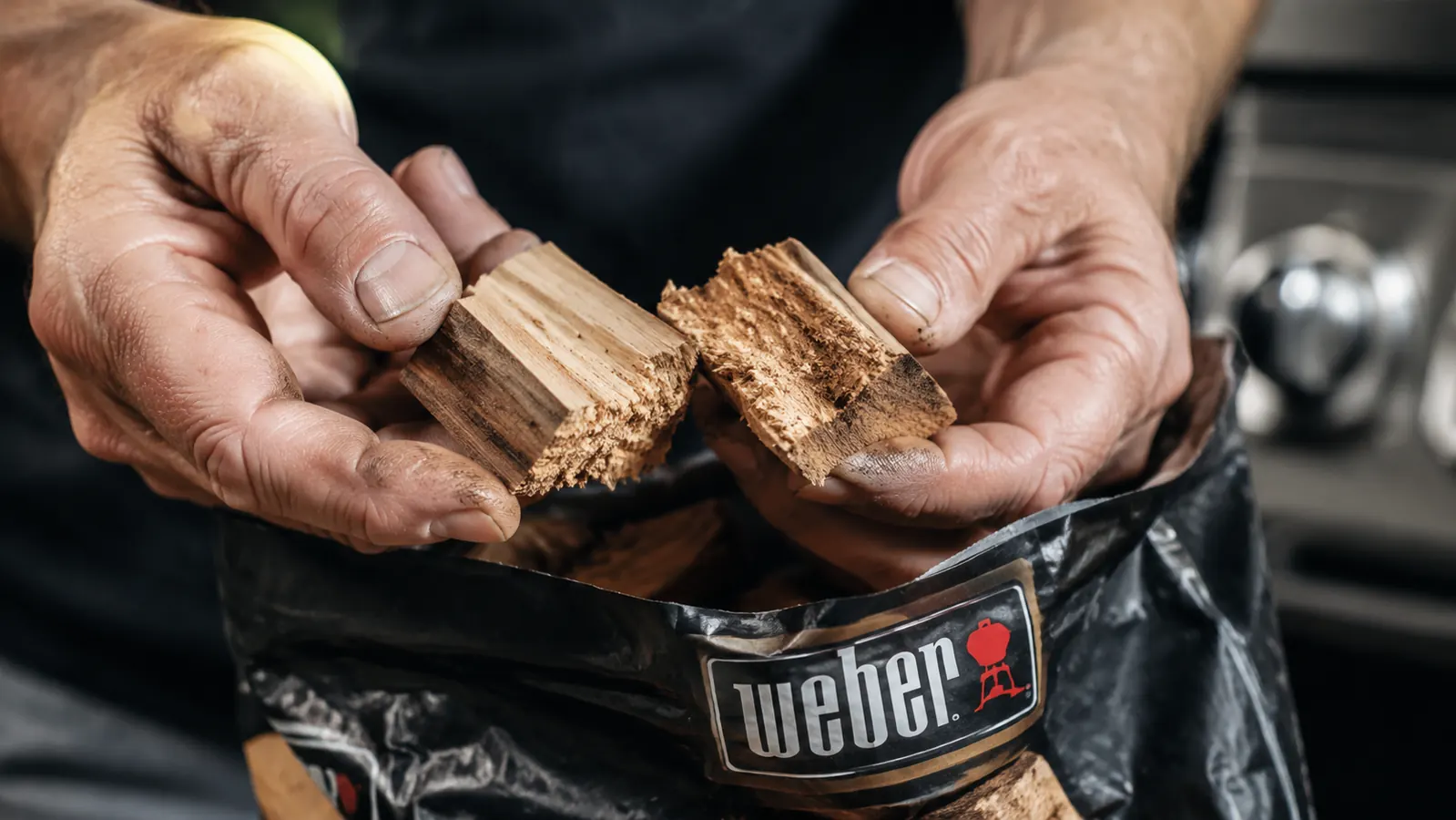
Crack open a bag of these and you'll get real fist-sized hardwood chunks, no argument there. But you'll also get a layer of bark fragments and loose wood dust settled at the bottom, and on two of my five bags that dust layer was thick enough to fill most of a coffee mug. It's not contamination or a bad batch, it's just what happens when hardwood chunks knock around in a bag during shipping. Nobody mentions it because it doesn't ruin a cook, but it does mean you're not getting a full four pounds of usable chunk wood every time.
The bark pieces themselves are the bigger issue. A few chunks in every bag I've opened have more bark than actual wood, sometimes close to half bark by volume. Bark burns faster and hotter than the dense wood underneath it, which means that particular chunk behaves nothing like the fist-sized piece sitting right next to it in the same smoker box. I learned to sort through the bag before a long cook, setting aside the bark-heavy pieces for shorter sessions like a batch of chicken thighs instead of a six-hour pork butt.
None of this makes the bag defective. It's just the honest texture of a natural product that a lot of reviews gloss over because a five-star rating doesn't leave room for nuance. If you're expecting uniform, lab-cut chunks like you'd get from a briquette, you'll be a little thrown the first time you dump the bag out onto a tray.
I mentioned the dust to the guy behind the counter at the hardware store one Saturday, mostly making conversation while I was buying charcoal, and he just shrugged and said every hardwood chunk bag he's ever sold has some dust in the bottom, and the trick regular customers use is saving it in a coffee can to sprinkle straight onto lit charcoal for a quick burst of flavor on a short cook. I've tried that since, and it works fine for something like a batch of burgers, so at least the dust isn't a total waste.
The Oversmoking Problem Nobody Warns You About
Here's the mistake I made more than once, and the one I see most often when Hank's brother-in-law visits and loads the smoker box like he's building a bonfire. Hickory has a strong, assertive smoke, and it's easy to assume that if one chunk tastes good, three chunks will taste three times as good. That's backwards. What actually happens past a certain point is the smoke turns from a clean blue-gray wisp into a thick white cloud, and that thick white smoke is where the bitter, acrid, almost ashtray flavor comes from, not from the wood itself but from incomplete combustion when there's too much fuel and not enough airflow.
That rib rack for Owen's birthday is the example I keep coming back to. I'd loaded the smoker box with three full chunks because I wanted the ribs to really taste like something for a crowd of relatives who don't come around often. Within the first hour the smoke had gone thick and white, and by the time those ribs came off, the bark on them tasted burnt in a way that had nothing to do with the grill temperature. Bonnie took one bite and set hers down without saying much, which for her is basically a review in itself. That's the kind of feedback that gets your attention fast.
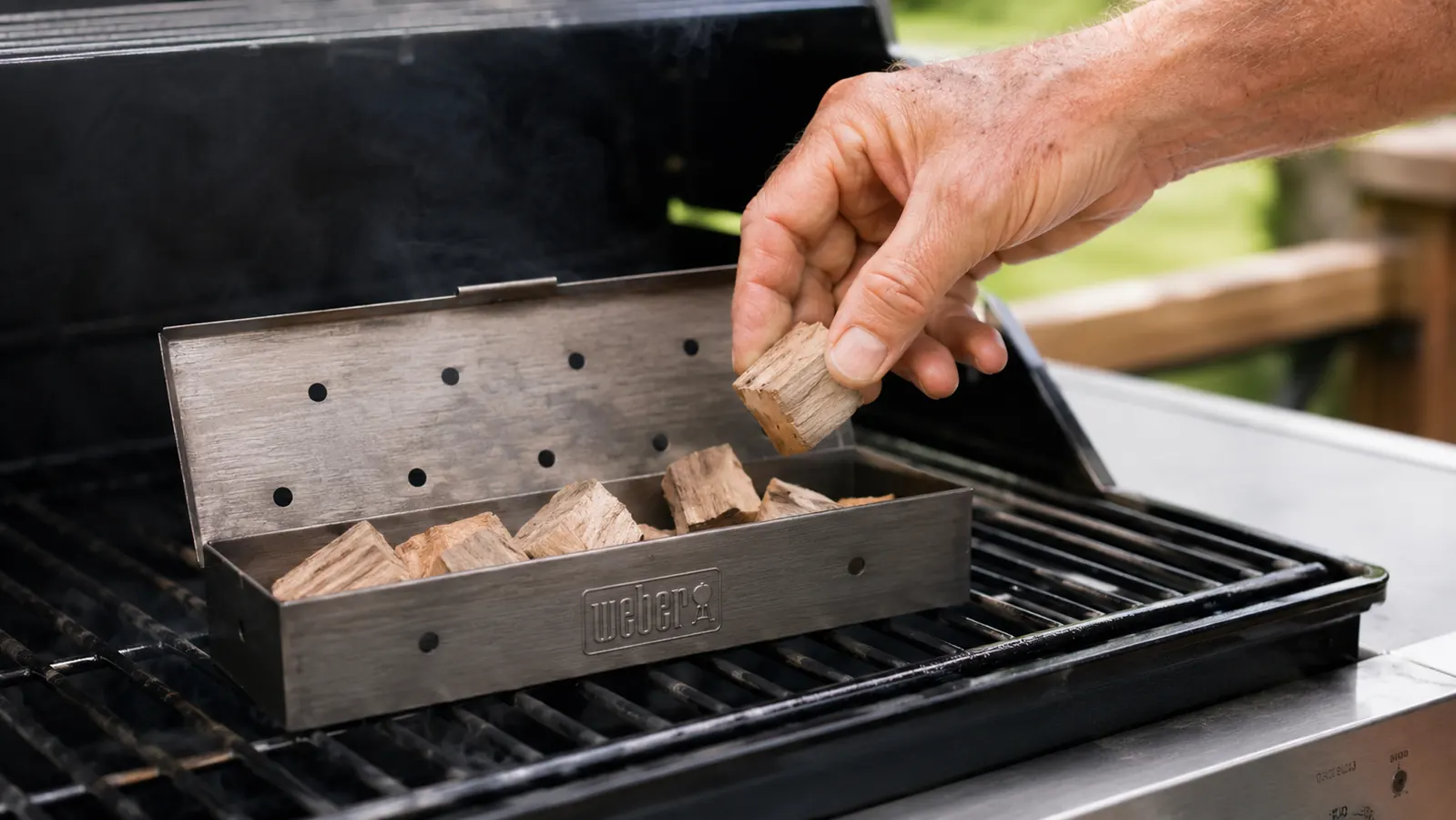
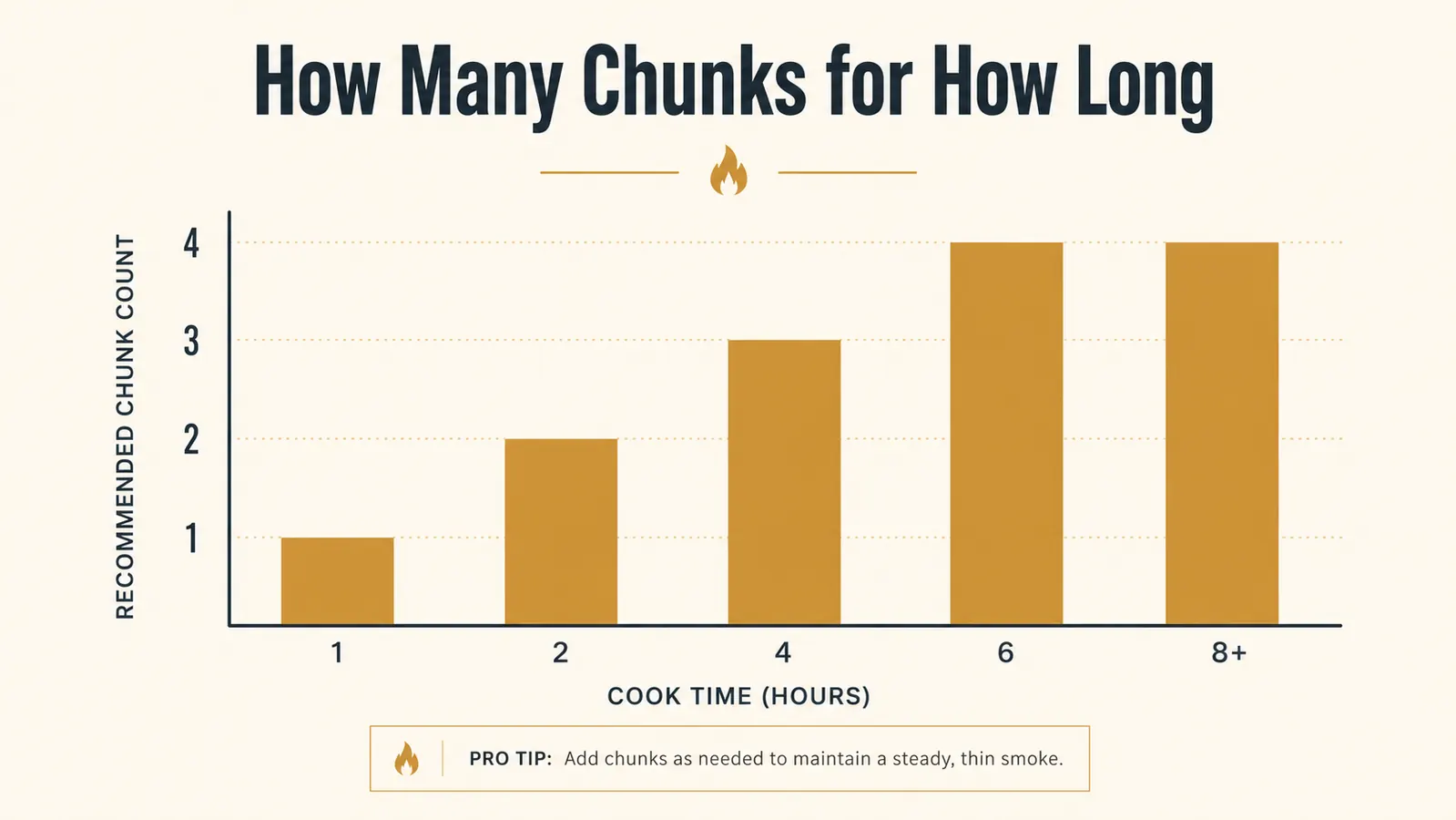
The fix turned out to be almost embarrassingly simple. Thin, blue smoke is what you want, and you get there with less wood than instinct tells you to use, not more. I now treat one chunk as the default for anything under two hours and rarely go past two chunks total even on an eight-hour brisket, adding the second only after the first has burned down partway. It's a smaller amount than I expected to need, and it's the single biggest change that improved every cook after that birthday.
What made it click for me was watching the smoke rather than the clock. A chunk that's producing good smoke shows a thin, almost see-through blue haze drifting off the grates. Once it billows up thick and opaque like a campfire that just got doused with green branches, that's your signal to vent the lid more or pull a chunk, not add another.
The Soaking Myth I Believed for Years
For most of a decade I soaked wood before using it, chunks and chips both, because that's what every backyard guide I ever read told me to do. Soak them in water so they smolder instead of burning up too fast, the logic goes. I did this with my first two bags of these Weber chunks too, dunking them in a bucket overnight before a cook, until my son Travis, who reads more of the actual science on this stuff than I do, sent me an article explaining that wood this dense barely absorbs water past the outer surface layer in an overnight soak.
What soaking mostly does with a chunk this size is delay ignition and create a burst of steam when the wet outer surface hits heat, which is exactly the kind of thing that can produce a sourer, more acrid smoke rather than a cleaner one. Once I stopped soaking and started using these chunks dry, straight from the bag, my smoke color got more consistent and my flare-ups actually went down, not up. I felt a little foolish, honestly, for years of bucket-soaking a product that never needed it.
I'll admit there's a place for soaking with very thin wood chips that burn up in minutes, but these Weber chunks are dense enough that dry use is the better call almost every time. If you've been soaking chunks out of habit the way I did, that's one easy thing to stop doing tomorrow, and it costs you nothing to try it dry on your next cook and compare.
How Much Is Actually Enough (And Who Overdoes It)
The honest dosage guide, after a lot of trial and a few bitter meals, looks like this. For anything under ninety minutes, chicken pieces, burgers, a quick batch of wings, one chunk is plenty and sometimes even that's more than you need. For a two to four hour cook like a rack of ribs or a smaller pork loin, one chunk added at the start with a second added partway through if the smoke has faded is about right. For anything past four hours, a brisket or a full pork butt, two chunks staged across the cook, never both dumped in at once, gets you steady flavor without the bitterness.
The people who overdo it, in my experience, fall into two camps. There's the first-timer who assumes more chunks means more flavor and loads the box heavy the way I did for Owen's birthday. And there's the guy who's used to milder fruit woods like apple or cherry and applies the same generous hand to hickory, not realizing hickory carries a stronger, almost bacon-like intensity that punishes overuse a lot faster than a lighter wood does. Hank fell into that second camp the first time he tried these chunks after years of running applewood, and he called me two days later still talking about how heavy his brisket had tasted.
There's a third camp too, smaller but worth mentioning, the guy who reads that hickory pairs well with just about everything and starts using it on food it was never suited for, like a delicate piece of cod or a light vegetable side. Hickory doesn't know the difference between a brisket and a zucchini, it just burns the same either way, so restraint has to come from the cook, not the wood.
If you're coming to hickory from a milder wood, start with less than you think you need. You can always add a second chunk partway through a long cook. You can't take smoke back out of the meat once it's in there.
What We Liked
- Real hardwood chunks that hold up through long, slow cooks
- Dry, ready to use straight from the bag, no soaking required
- Strong hickory flavor that stands up well on beef and pork
- Burns cleaner than chips once you dial in the right amount
Where It Falls Short
- Bark content and dust vary noticeably from bag to bag
- Easy to oversmoke and get a bitter, acrid result if you overload the smoker box
- A few bark-heavy chunks in every bag burn faster and hotter than the rest
- Strong enough that it can overwhelm lighter, faster-cooking meats
The bag never tells you thin blue smoke beats thick white smoke every time. You have to burn a few bad cooks to learn that yourself, or you can just take my word for it now.

Who This Is For
This is a good fit if you're already comfortable running a gas grill with a smoker box or a charcoal kettle and you want a real wood-fired flavor without babysitting chips every twenty minutes. It's also a solid pick if you're moving up from milder woods and want to try hickory's stronger profile on brisket, pork shoulder, or a thick-cut roast, as long as you're willing to start light and adjust from there instead of assuming more is automatically better.
Who Should Skip It
If you're brand new to smoking and haven't yet learned to read smoke color, hickory chunks can be an unforgiving place to start, since the margin between good smoke and bitter smoke is narrower than with a milder wood like apple or pecan. I'd also skip these if you mostly cook quick items like fish fillets or thin chicken breasts, where hickory's intensity tends to overpower rather than complement what's actually cooking.
Now that you know how little it actually takes
Used the right way, one or two Weber Hickory Wood Chunks per cook is genuinely all you need, and that's a better deal than most people realize before they buy their first bag.
Amazon Check Today's Price on Amazon →