

Before I bought the Hans Grill Pizza Stone PRO XL, I did something I don't normally do. I sat at my kitchen table with a cup of coffee and scrolled through two solid hours of one-star and two-star reviews on Amazon. Not the five-star ones, the complaints. I wanted to know what 13,000-plus people were actually running into before I dropped my own grill grates down and set a solid slab of cordierite on top of them.
My wife Bonnie thought I was being ridiculous. "Carl, it's a rock with a fancy name," she said. She wasn't wrong about what it is. But after three pizza nights with my grandkids Mia and Owen underfoot begging for pepperoni, I can tell you the complaints I read weren't wrong either. Some of them, anyway. This is the review I wish I'd had before I bought it, the stuff that actually surprised me once it was on my grill and not just in a review thread.
The Quick Verdict
A genuinely good stone once you know its quirks. It rewards patience and punishes rushing. If you go in expecting a 10-minute preheat and a stone that wipes clean, you'll be disappointed. If you go in ready to wait it out and accept permanent stains as the cost of doing business, you'll love it.
Amazon Check Today's Price →Read the Warnings First, Then Decide
I'm not here to talk you out of it. I'm here to make sure the surprises hit you before you buy it, not after your first cook.
Amazon Check Today's Price on Amazon →How I've Used It
I run a 3-burner Weber gas grill most weekends and keep a charcoal kettle around for when Hank comes over and insists charcoal is the only real way to cook anything. The Hans Grill stone has lived on the gas grill almost exclusively for about ten pizza nights now, plus a couple of flatbreads and one attempt at grilled naan that Owen declared "too crispy on the edges, Pop-Pop."
I didn't buy this to review it for a living. I bought it because Bonnie's sister brought a wood-fired pizza to Thanksgiving two years back and I haven't stopped thinking about that crust since. So my testing has been real dinners, real mess, real 6-year-old asking why the stone "has spots on it" the third time we used it.
I also went in with lower expectations than most reviewers seem to. I wasn't trying to replicate a $4,000 wood-fired oven. I just wanted a crust that snapped instead of flopped, and I wanted something my grandkids would actually remember years from now. That framing matters, because a lot of the disappointed reviews I read online seemed to be comparing this stone to equipment in a completely different price class, then getting frustrated when a mid-priced stone didn't behave like one.
That last part is actually where this review starts, because the spots are one of the things nobody warned me about.
The Preheat Time Nobody Mentions
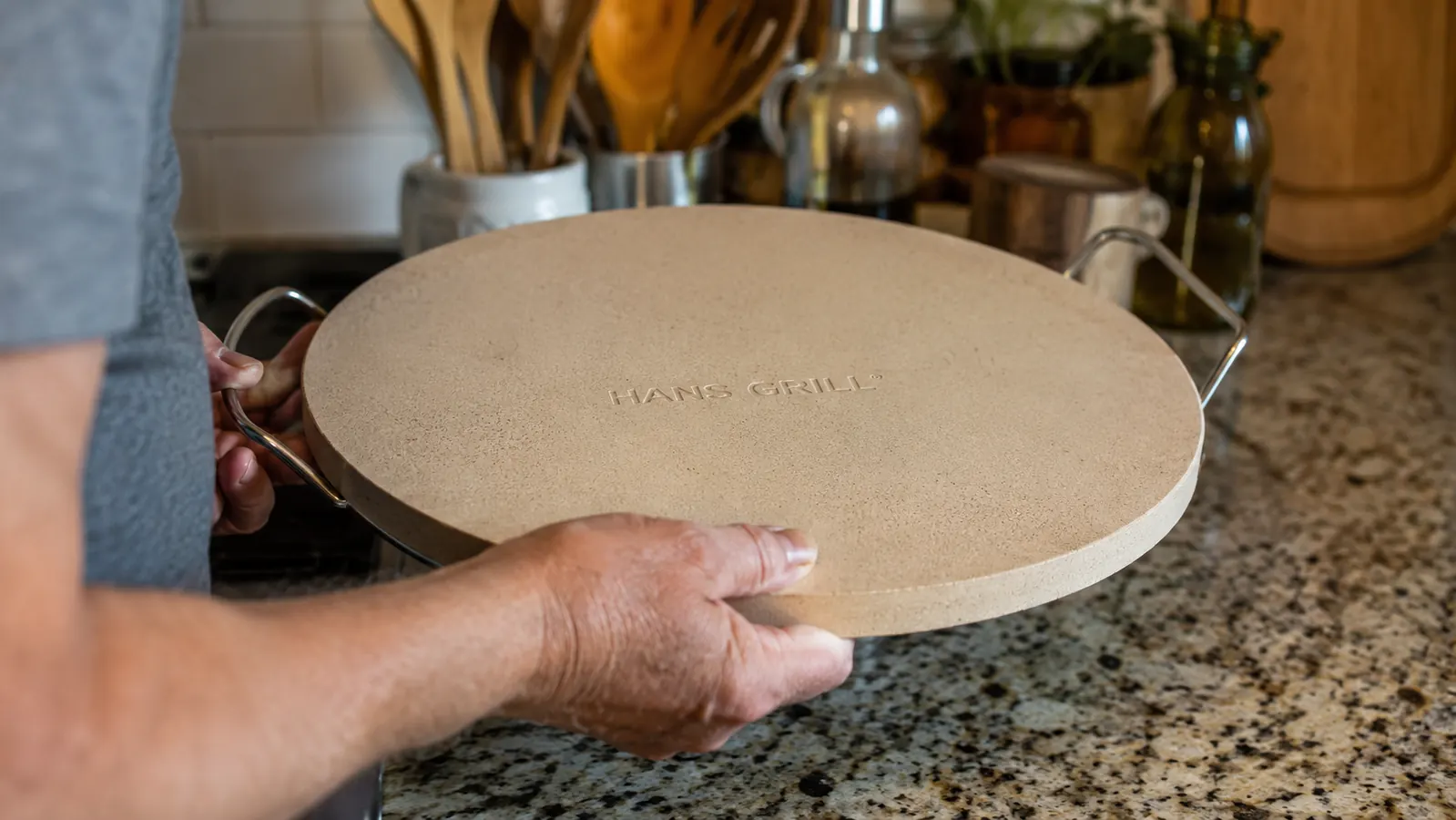
Here's the first thing that caught me off guard. I figured I'd fire up the grill, toss the stone on, wait maybe fifteen minutes, and start sliding pies. That is not how this works, and if you try it that way you'll end up with a pizza that's burnt on the bottom crust edge and pale and doughy in the center, which is exactly what happened to my first pie.
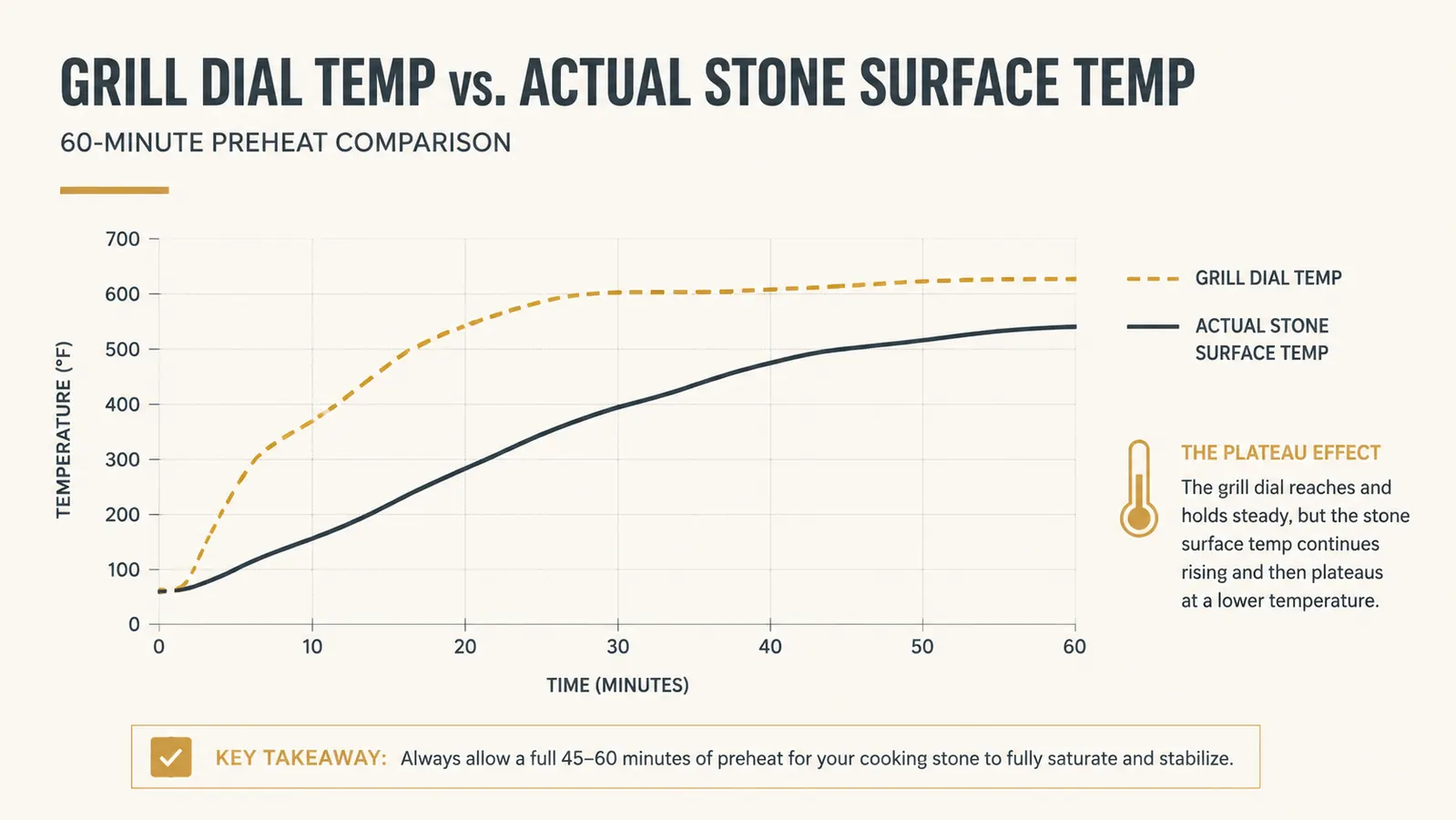
Cordierite stones like this one need to soak in heat, not just sit near it. I clocked my second attempt with a cheap oven thermometer laid right on the stone surface. Dial on the grill said 500 degrees at the twenty-minute mark. The stone itself was barely at 350. It took a full 45 minutes with all three burners running before the surface actually matched what my grill's built-in thermometer claimed the grate area was doing.
Nobody puts that on the box. The listing photos make it look like a quick weeknight tool, and once it's hot it genuinely is fast, five to seven minutes per pie. But getting there takes real patience, and if you're the type who wants dinner on the table in twenty-five minutes flat, this stone is going to frustrate you before it ever rewards you.
What helped me was building the preheat into my routine instead of treating it as dead time. I start the grill and the stone the same moment I pull the dough balls out to come to room temperature, and by the time the dough is workable, the stone is usually within striking distance of ready. It's a rhythm, not a switch you flip, and once Bonnie and I settled into that rhythm the whole preheat complaint mostly disappeared.
How Heavy This Thing Actually Is
I'm 65 and I still load hay bales for a neighbor most falls, so I don't consider myself weak. But the first time I pulled this stone out of the box I said something out loud that I won't repeat here with grandkids in the house. It's listed as a large stone and it earns that description. Once it's hot, moving it is a two-handed, use-your-legs kind of job, not a one-hand-while-holding-a-beer kind of job.
The bigger issue is handling it once it's on the grill. There's no built-in handle, no rack, nothing. If your grill grates aren't perfectly level, which mine weren't until I shimmed one side with a folded piece of foil, the stone can sit slightly tilted, and a tilted 14-plus-pound hot ceramic slab is not something you want shifting while you're leaning over it with a peel in one hand.
Travis, my son, came over for the fourth pizza night and offered to help me slide it out after cooking. I told him no thanks, and then immediately regretted it because my forearms were sore the next morning from wrestling a hot stone off uneven grates. If you've got any grip or shoulder issues, factor that into the buying decision. This is not a light accessory, and a lot of the shipping-damage complaints I read online may honestly trace back to how awkward this thing is to package and handle in the first place.
The Smoke Stains That Never Come Off
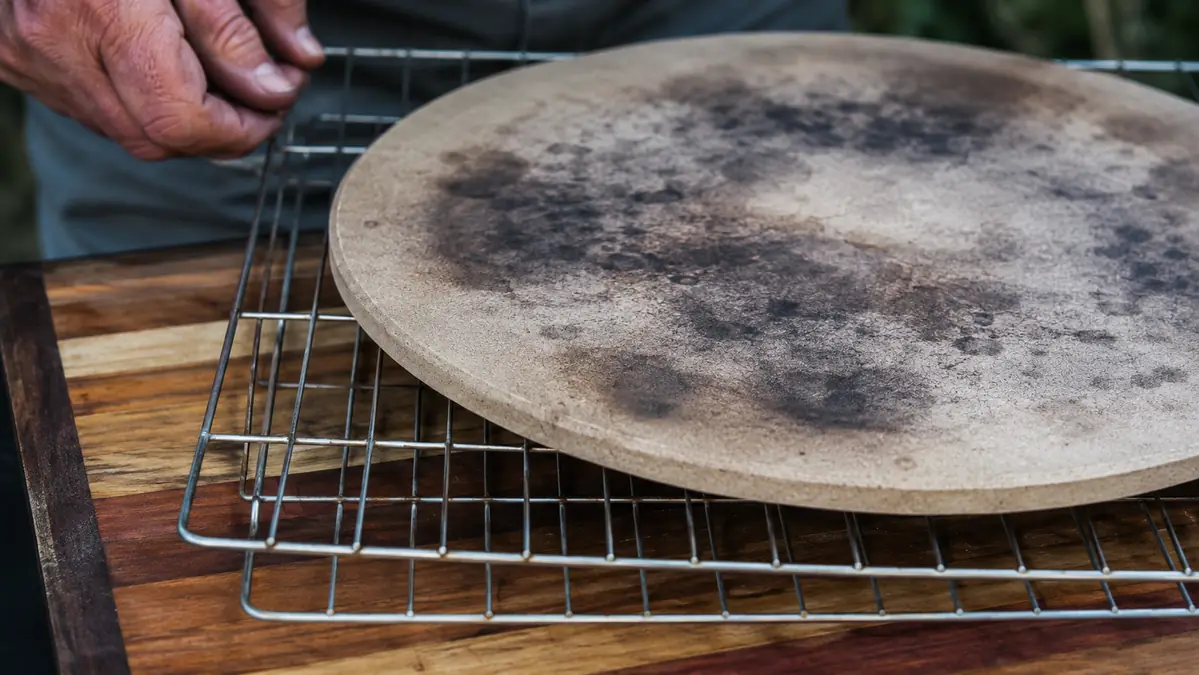
This is the one that got Owen asking questions. After the third use, the underside of the stone had developed dark, blotchy rings, almost like a tie-dye pattern in gray and black. My first thought was that I'd damaged it or that grease had somehow soaked through. It hadn't. That's just what happens to a porous cordierite surface exposed to smoke, drippings, and repeated heating cycles.
I scrubbed at those marks with a stiff brush and hot water expecting them to lift. They didn't budge. I looked it up afterward and found this is normal and even expected for this material, cordierite is meant to be seasoned like cast iron rather than scrubbed clean like a dinner plate. But nobody tells you that going in, and if you're someone who likes your cookware looking showroom-fresh, this stone is going to bother you within a month.
The upside, and I'll give credit where it's due, is that the staining is purely cosmetic. It hasn't affected the taste or the bake on a single pizza since. Bonnie still thinks it looks like something dragged out of a burn pile. She's not wrong, but the pizza tastes the same regardless of what the bottom of the stone looks like, and by our fifth or sixth cook I'd stopped even noticing the marks myself.
My First Pizza Stuck Like Glue
The other thing I wish someone had told me before my first attempt: this stone needs flour or cornmeal on it every single time, and more than you'd think. My first pie, I dusted the peel lightly, figured that was enough, and slid the dough onto the hot stone with total confidence. Big mistake. By the time I went to rotate it halfway through, the crust had fused to the surface like it had been welded there.
I ended up scraping half a pizza off in pieces with a metal spatula, which is not a great feeling in front of your grandkids who were already sitting at the picnic table with plates ready. Mia, who is 8 and very direct, told me "that's not how Uncle Travis does it," which stung a little.
Once I switched to a heavier hand with cornmeal, and made sure my dough wasn't sitting on the peel for more than a minute before it went onto the stone, the sticking stopped completely. But that first-cook lesson cost me a ruined pizza and some pride, and it's a mistake I see echoed in a good chunk of the lower-star reviews online. This stone is less forgiving of a light dusting than the nonstick pans most people are used to, and it took me until my third attempt to trust that I wasn't over-flouring things.
The Thickness Variance Between Mine and Hank's
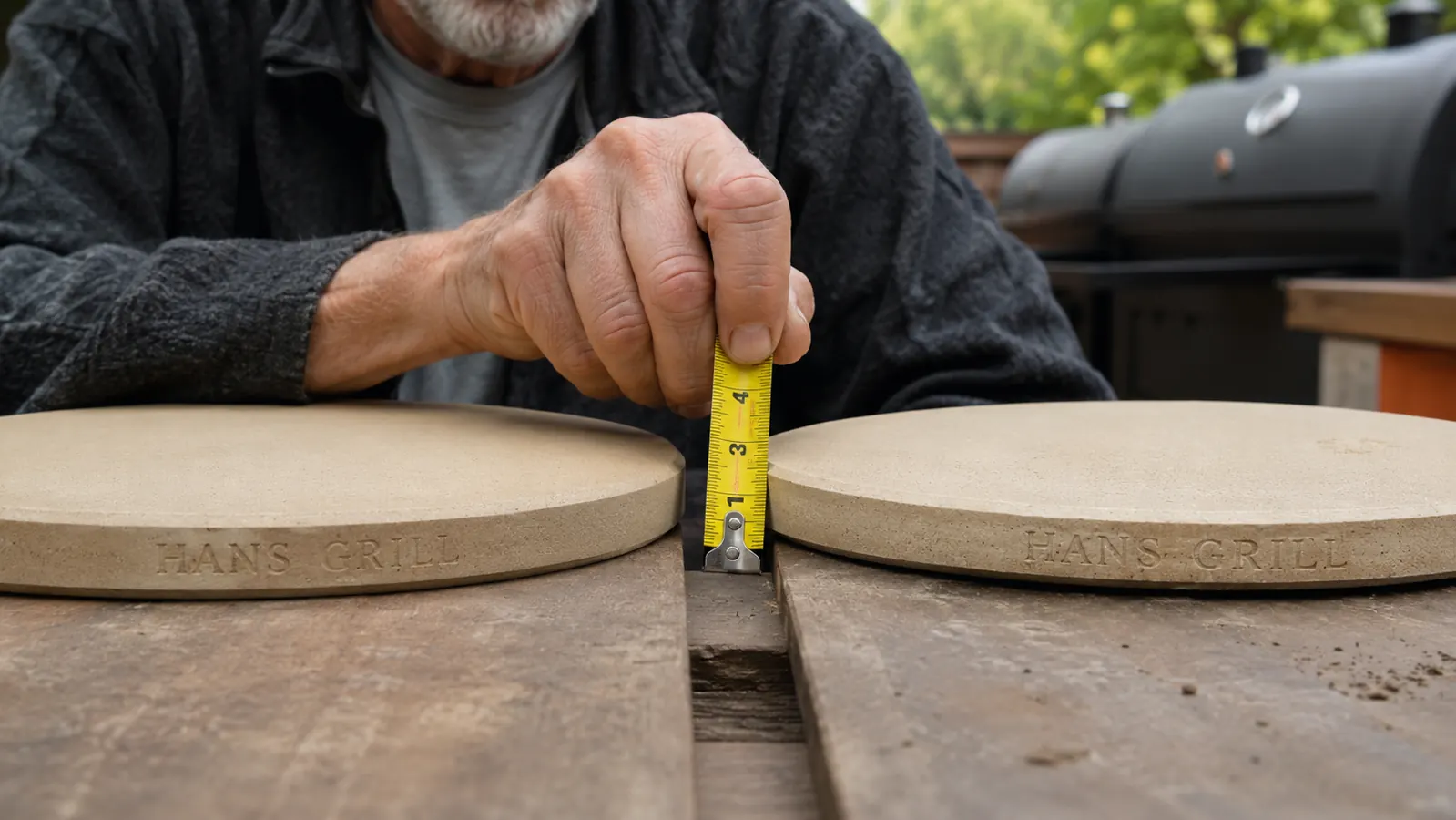
Hank, my buddy from two streets over, bought the same stone about a month after I did because he liked what he tasted at my place. When he brought his over so we could do a side-by-side cook for the county fair chili contest prep, I noticed something odd. His stone measured just a touch thinner than mine, maybe an eighth of an inch, when we laid a tape measure across both edges.
It wasn't a huge gap, and it didn't ruin his stone or make it unusable, but his did seem to heat up slightly faster and cool down slightly faster too, which tracks with less mass holding the heat. Reading through other buyer comments after that, a handful of people mention warping or slight bowing over time, mine hasn't warped after ten uses, but the thickness inconsistency from unit to unit is real enough that Hank and I both noticed it without going looking for it.
My takeaway is that quality control here is decent but not perfectly uniform. Most buyers, myself and Hank included, get a stone that performs fine. A smaller number seem to get a thinner or less even piece that's more prone to hot spots or eventual cracking under thermal stress. It's worth inspecting yours closely when it arrives, running a hand along the edge to check for consistent thickness, rather than assuming every unit off the line is identical. Hank ended up returning his for a replacement just to be safe, and the second one he got matched mine almost exactly, so it may simply be a matter of getting unlucky on a given batch rather than a systemic flaw.
What We Liked
- Produces a genuinely crisp, evenly baked crust once fully preheated
- Handles high, sustained grill heat without flashing or cracking in my use
- Cordierite retains heat well for back-to-back pies once it's up to temp
- Large enough surface for a full 12 to 14 inch pizza with room to spare
Where It Falls Short
- Preheat time runs closer to 45 minutes than the quick warmup the listing implies
- Heavy and awkward to move once hot, no handles or carrier included
- Permanent smoke staining on the underside starts within a few uses
- Sticks badly on the first cook if you underestimate the flour or cornmeal needed
- Thickness and heat retention vary slightly from unit to unit
Nobody puts the preheat time on the box, and nobody warns you the stains are forever. Once you know both of those going in, this stone stops surprising you and starts just working.
Who This Is For
This stone is for the griller who's willing to trade convenience for a better crust, someone who can start preheating the grill before they even start rolling dough and treat that lead time as part of the ritual rather than a chore. If you already season cast iron and don't mind a pan that looks lived-in, the staining won't bother you one bit. It's also a solid pick if you're cooking for a crowd, since the size handles a full pie without crowding the edges, and it's forgiving enough once you know the flour trick that even a first-timer can turn out a good pie by their second attempt.
Who Should Skip It
If you want a quick Tuesday-night pizza with minimal lead time, or if you've got any shoulder, wrist, or grip limitations that make wrestling a heavy hot slab a genuine risk, look elsewhere. Same goes if you're particular about your cookware staying visually clean, because this one will look worn within a month regardless of how carefully you use it. And if you're not willing to be generous with flour or cornmeal on that first cook, you're going to have Mia telling you it's not how Uncle Travis does it too. Folks expecting an appliance-like experience out of the box tend to end up disappointed no matter how good the crust turns out.
Know What You're Getting Into Before It Ships
The Hans Grill stone earns its rating, but only from people who went in with realistic expectations about preheat time, weight, and staining. Now you have them.
Amazon Check Today's Price on Amazon →