
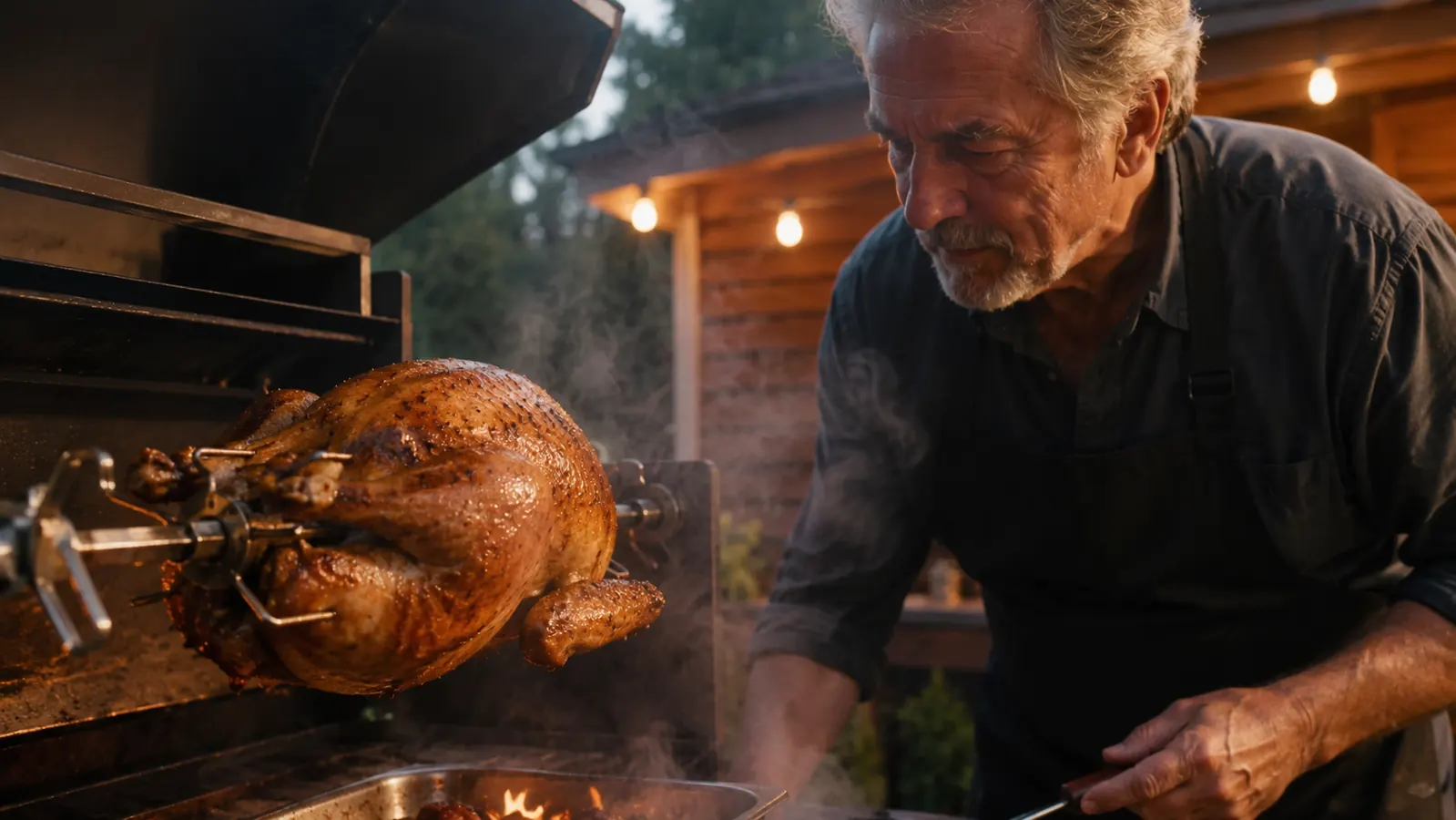
I've been grilling in my driveway for close to forty years, and for most of them I cooked whole chickens the same way everybody does: right over the burners, flipping every ten minutes and hoping the breast didn't dry out before the thighs finished. Then my son Travis talked me into trying the Dyna-Glo Universal Deluxe Rotisserie Kit on my 3-burner gas grill two summers ago, and it changed how I feed my family on a Sunday. Bonnie noticed the difference in the first bite. So did my buddy Hank, who now borrows my kit more than he uses his own smoker.
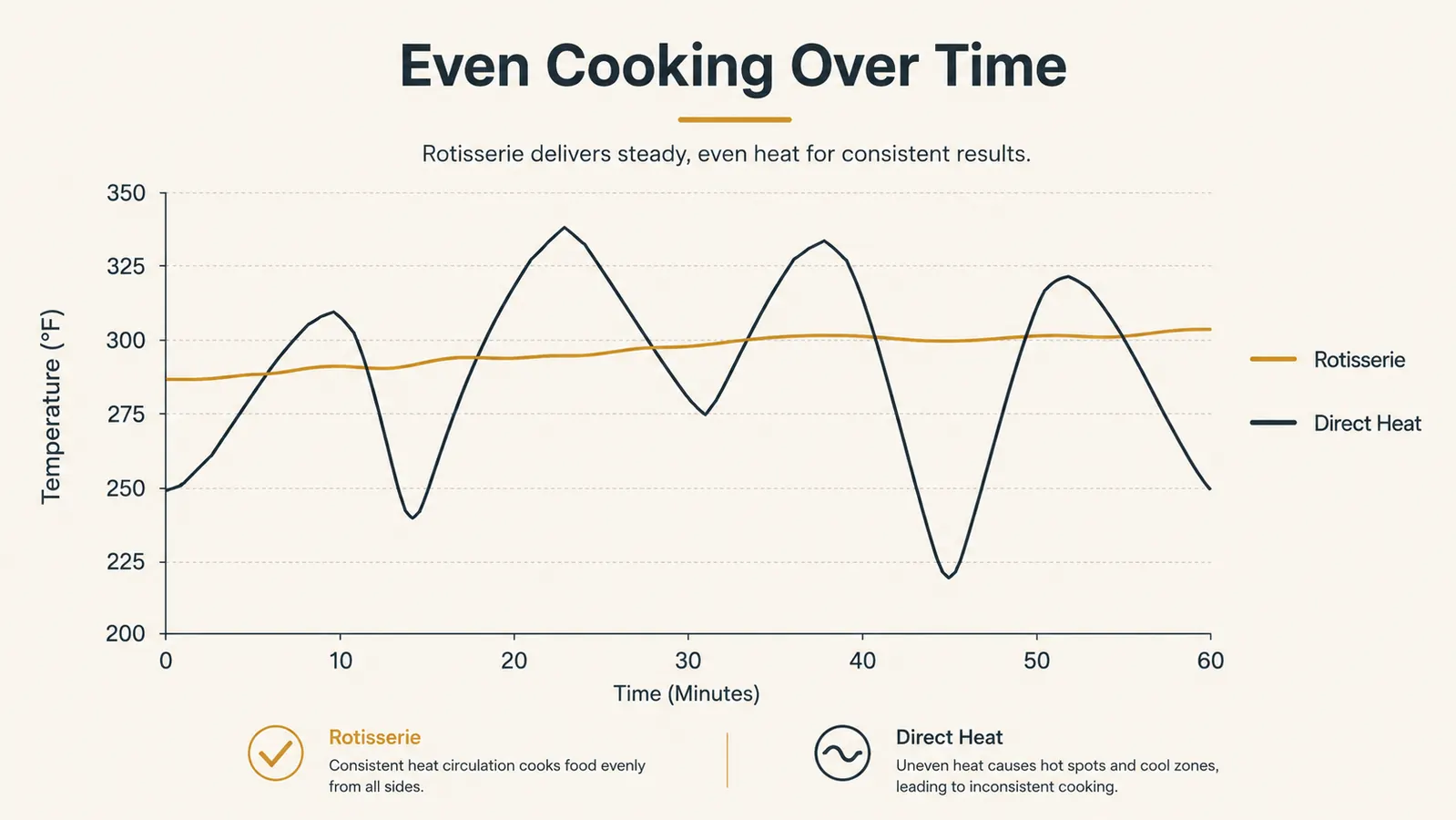
Direct heat isn't wrong, it's just limited. It sears fast and it's great for a burger or a steak, but a whole bird or a big roast needs slow, even, all-sides heat to come out right. That's the entire idea behind a rotisserie setup, and once you've had a spit-roasted chicken next to a grilled one, you can taste the difference before you even reach for the salt. Here are the ten reasons I've landed on rotisserie grilling for anything bigger than a chop, and why the Dyna-Glo kit earned a permanent spot in my garage.
Tired of dry breast meat and burnt skin on your Sunday chicken?
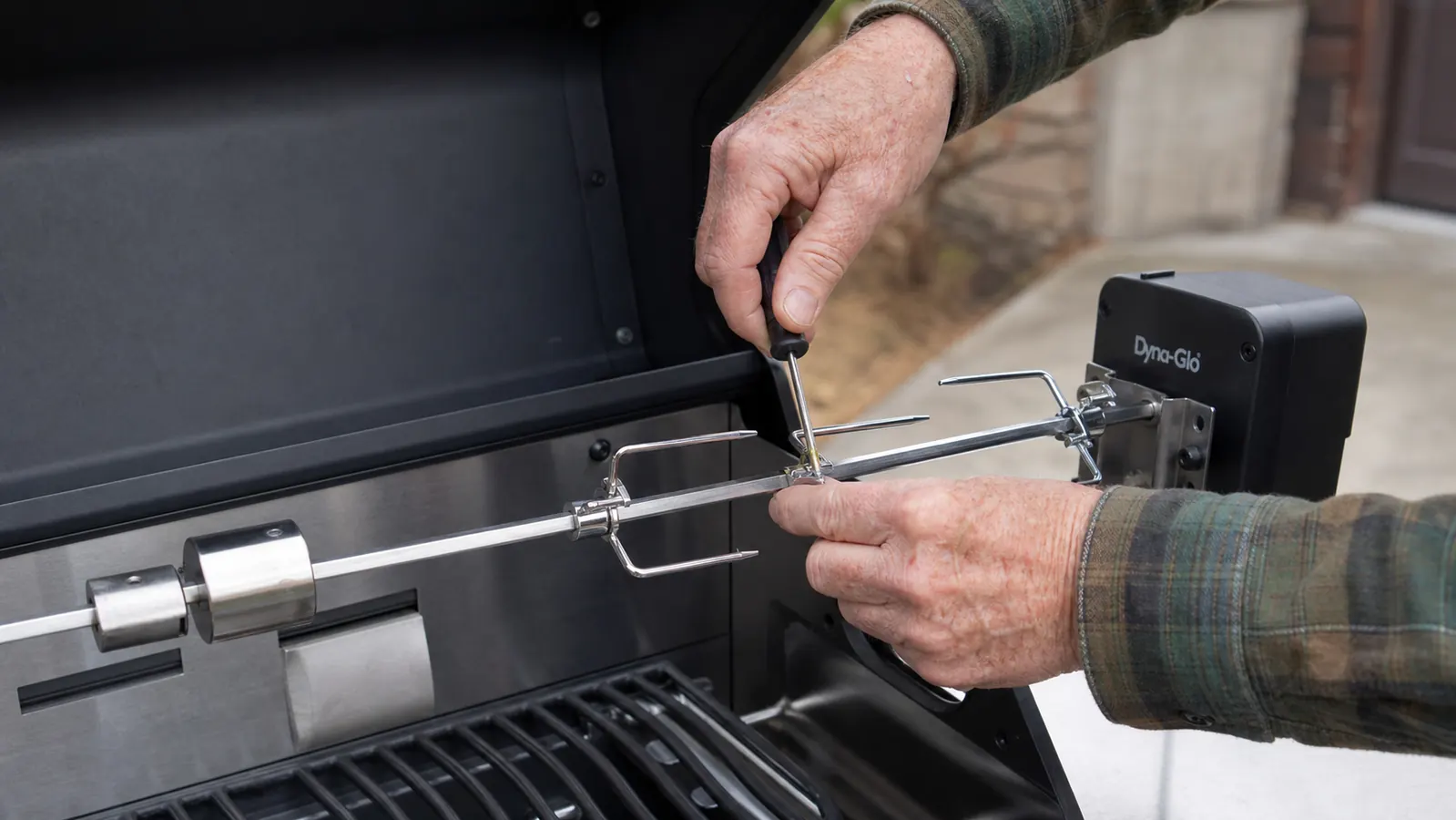
The Dyna-Glo Universal Deluxe Rotisserie Kit fits most 3 and 4-burner gas grills and turns your existing setup into a self-basting rotisserie in about fifteen minutes. No new grill required.
Amazon Check Today's Price on Amazon →Every side gets the same heat, not just the side facing the flame
On direct heat, one side of a chicken always cooks faster than the other, so you're constantly flipping and still ending up with an unevenly done bird. Mount that same chicken on the Dyna-Glo spit rod and it rotates through the heat at a steady pace, meaning the breast, thighs, and back all reach temperature closer together. I check with an instant-read thermometer at the thigh now instead of guessing, and I'm consistently within a few degrees of even doneness across the whole bird, something I never got over direct flame.
The meat bastes itself as it spins
This is the one that sold Bonnie. As the chicken or roast turns, the rendering fat and juices continuously wash back over the meat instead of dripping straight into the flame and burning off. You get a self-basting effect the entire cook, no brushing required, no opening the lid every ten minutes to mop on sauce. The skin comes out glossy and the meat underneath stays noticeably juicier than anything I ever pulled off the grates.
Fewer flare-ups because the fat doesn't hit the flame directly
With a whole chicken laid straight over the burners, rendered fat drips down and causes flare-ups that char the skin in patches. On the rotisserie, the drippings mostly land in a drip pan below rather than directly on the heat source, so I get far fewer flare-up scares. I still keep an eye on it, but I'm not standing there with tongs putting out little grease fires like I used to.
Crispier, more even skin from edge to edge
Constant rotation means the skin renders evenly all the way around instead of getting soggy on the bottom where it sits against the grate. Every piece of skin gets equal exposure to the heat over the full cook, which is why a rotisserie chicken has that uniform, crackly-all-over skin you notice at a good rotisserie shop. Mine hasn't come out soggy on the underside once since I started using the Dyna-Glo kit.
You can walk away instead of babysitting the grill
Direct heat grilling of a whole chicken means staying close, flipping, checking, moving pieces around. Once the Dyna-Glo motor is turning the spit, I set a timer, go help Owen with his homework or sit with Bonnie on the porch, and check back every 20 to 30 minutes. It's the closest thing to hands-off cooking you get on a gas grill.
Bigger cuts of meat actually fit and cook properly
A 6 or 7 pound chicken, a pork loin, even a small turkey, these are awkward on a standard grate because the middle never quite catches up to the outside. Threaded onto the Dyna-Glo spit rod with the counterweight balanced, the same cut rotates through consistent heat the whole time. I've done a 12 pound turkey for Thanksgiving on this rig two years running and it beat anything that came out of the oven.
Deeper, more even smoke flavor if you're adding wood
When I toss a chunk of hickory under the rotisserie setup, the turning meat picks up smoke evenly on all sides instead of just the side facing the wood chips like it would over direct heat. It's a subtler smoke ring than a dedicated smoker, but for a weeknight or weekend cook on the same grill I already own, it's a real upgrade in flavor depth.

The presentation alone gets people excited before dinner's served
There's something about a golden bird slowly turning on a spit that gets everybody hovering near the grill. Mia and Owen ask to watch it spin before they'll even sit at the table. It's a small thing, but when you're feeding grandkids, a little theater with dinner doesn't hurt.
It handles more than poultry, so the kit earns its keep
I've rotisseried pork loin, a small leg of lamb for Easter, and even a rack of ribs curled onto the spit basket accessory. Once you own the Dyna-Glo kit, it's not a one-trick chicken tool, it's a second cooking method for the grill you already have. That versatility is why I reach for it more some months than I reach for my charcoal kettle.
Less shrinkage means more meat on the plate
Direct heat grilling tends to render out more fat and moisture fast, which shrinks the meat and leaves less on the bone by the time it's done. The slower, more even rotisserie cook renders fat out more gradually, so I consistently get more usable meat off the same size bird compared to grilling it flat over the flame. On a family of six plus Hank showing up uninvited, that difference matters.
What I'd Skip
I wouldn't bother rotisserie-ing small cuts like chicken thighs, burgers, or anything under about 2 pounds. The spit and counterweight setup is built for a single large, balanced piece of meat, and small or oddly shaped cuts just don't thread on well or spin evenly. For those, direct heat on the regular grates is still faster and just as good. I'd also skip trying to run the rotisserie motor on a grill without a rear burner or infrared burner behind it, since you lose some of the even-heat advantage without that extra heat source pushing from behind.
Once you've watched a chicken baste itself for an hour and a half without you touching it once, going back to flipping over direct flame feels like a step backward.
Ready to stop babysitting your grill every time you cook a whole bird?
The Dyna-Glo Universal Deluxe Rotisserie Kit mounts to most gas grills in about 15 minutes and turns your Sunday chicken into a set-it-and-check-it meal. Check current availability and see if it fits your grill.
Amazon Check Today's Price on Amazon →